Your Tote Bag Holds Everything. Why Is One Shoulder Doing All the Work?
Your laptop, water bottle, makeup pouch, keys, charger, wallet, and a book all fit inside your favorite tote. It's convenient and saves you from carrying several smaller bags.
By the end of your commute, one shoulder may feel tired and your neck tighter on one side. You switch the bag, then switch it back because the other side feels strange.
The bag may be contributing to that discomfort. That doesn't mean it is damaging your spine or causing every shoulder ache, but recurring symptoms deserve a closer look.

The Everyday Bag You Never Think Twice About
A tote goes everywhere: work, errands, grocery runs, and coffee stops. The problem isn't necessarily the bag itself. It's the load, carrying time, and whether one side consistently handles it.
What Happens When You Keep Carrying Weight on One Side
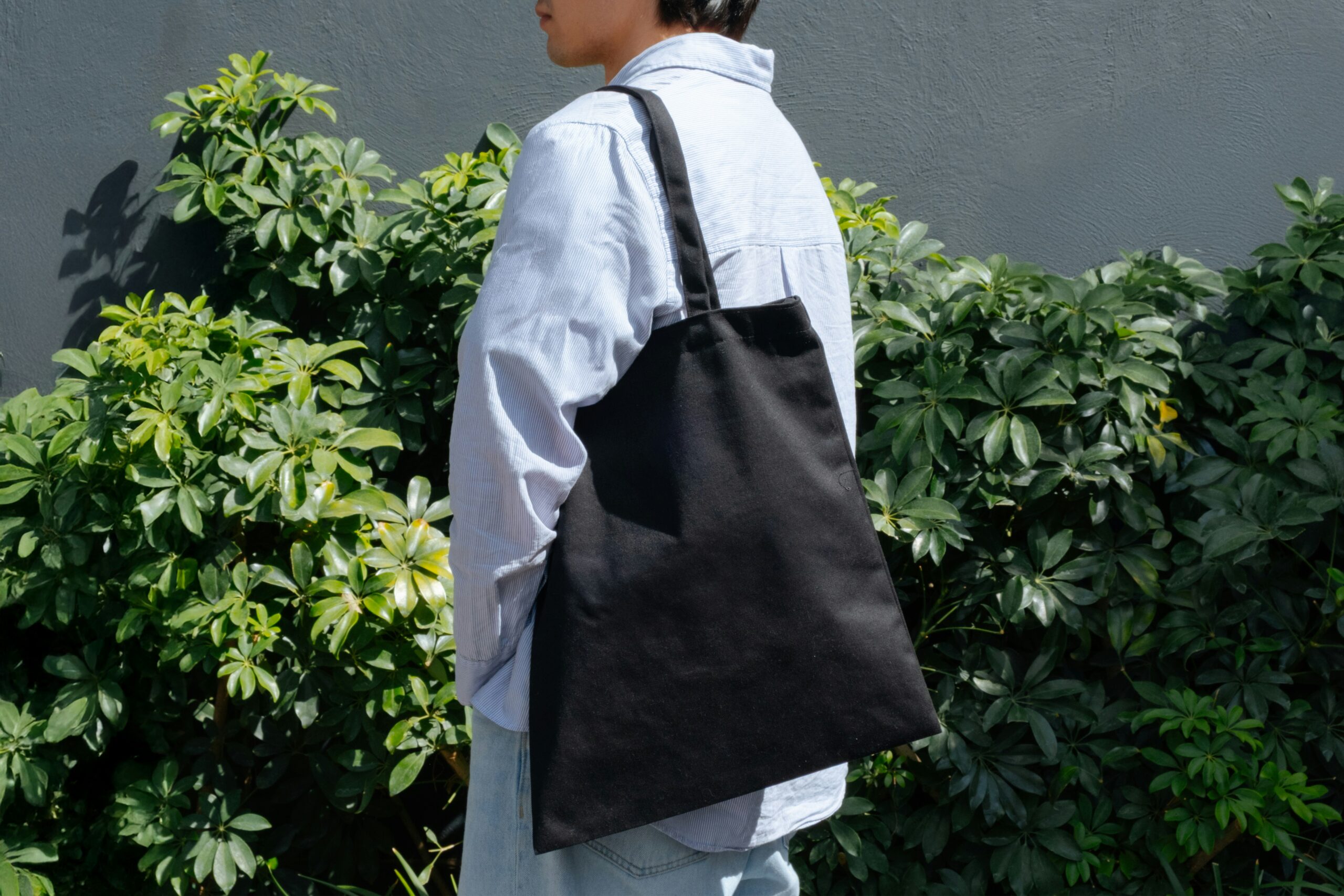
When you place a loaded tote over one shoulder, your body has to accommodate an uneven load. You might respond without realizing it by lifting the carrying shoulder, holding that arm closer to your body, or shifting your trunk while walking.
Small laboratory studies help show what that adaptation can look like. In a randomized study of 13 healthy women carrying handbags at 5%, 7%, and 10% of body weight, greater loads shifted center of pressure toward the carrying side and produced asymmetric upper-trapezius and back-muscle activity; spinal curvature did not change during the test.
A 2026 repeated-measures study of 24 healthy young adults found that asymmetric shoulder or hand loads at 15% and 20% of body weight increased side-to-side center-of-pressure shift and postural sway, with some responses increasing at the heavier load. Those findings show that the body responds measurably to asymmetric loading; they do not establish that an everyday tote causes injury.
A separate study of 17 young adults carrying 7% of body weight while stepping down a curb found changes in upper-limb coordination but no change in the measured foot-curb negotiation variables. In other words, the body adapted to the load without the tested walking task necessarily breaking down.
The effect in daily life can vary with your strength, conditioning, bag weight, carrying time, and whether you already have a shoulder or neck problem.
Most importantly, an ache that appears while carrying a bag does not by itself establish a structural shoulder injury. Temporary muscle discomfort and structural injury are different things. MedlinePlus notes that shoulder problems are diagnosed using medical history, a physical examination, and imaging when needed.
Why the Contents and Weight of Your Bag Matter
Think about what's actually inside your tote. A laptop, full water bottle, notebook, lunch container, charger, umbrella, and small items can become a substantial load even when no single item feels heavy.
Distance and duration matter, too. Carrying a bag from your car to your desk isn't the same as walking around a city with it for an hour. OSHA ergonomics guidance notes that carrying distance and keeping a load farther from the body can increase manual-handling demands.
There is no well-established universal safe-weight limit for an adult tote bag. Research often uses a percentage of body weight to standardize experimental loads, but those percentages should not be treated as clinical safety cutoffs.
A Three-Part Tote Check: Load, Time, Response
You can make your own carrying pattern more concrete without trying to diagnose yourself. First, weigh the loaded bag. If you want context, divide the bag's weight by your body weight and multiply by 100. A 6-pound tote carried by a 150-pound person is 4% of body weight. That percentage is descriptive, not a safety threshold.
Next, note how long you actually carry the bag rather than how long you own or commute with it. Finally, compare your response on similar days: reduce the load, shorten the carrying time, or use a more balanced carrying method and note whether the same discomfort changes. A consistent improvement can suggest that carrying is contributing to symptoms, but it does not identify a diagnosis.
When Carrying Your Bag Starts Feeling Uncomfortable
Shoulder discomfort doesn't always arrive as sharp pain. Sometimes, it's a gradual sensation you notice only after putting your bag down.
Your shoulder might feel unusually heavy, your upper back may ache, or turning your head could feel less comfortable than usual.
These sensations may occur with muscle fatigue, but symptoms alone aren't enough to identify a specific medical condition.
Shoulder Fatigue, Neck Tension, and Everyday Discomfort
The shoulder is a highly mobile joint supported by muscles, tendons, ligaments, and other structures that allow a wide range of movement.
According to MedlinePlus, shoulder problems can include strains, tendinitis, bursitis, rotator cuff tears, fractures, arthritis, and other conditions.
If discomfort develops while you're carrying a heavy tote, reducing the load or taking a break can help you observe whether carrying seems related to your symptoms.
For example, you might feel comfortable during an ordinary walk but notice fatigue when carrying a laptop and several other items. That pattern is useful information, although it doesn't prove the bag is the sole cause.
Also, avoid treating every uncomfortable sensation as proof that your posture is wrong. A bag-related ache does not diagnose a posture problem. Focus instead on whether a position or carrying method repeatedly causes symptoms or makes movement harder.
Why Shoulder Pain Doesn't Always Come From Your Bag
Sometimes the timing is misleading. You notice shoulder discomfort while carrying your tote, but the underlying problem may have developed for another reason.
MedlinePlus lists rotator cuff problems, bursitis, arthritis, tendon injuries, fractures, dislocation, and other conditions among possible causes of shoulder pain. Pain felt around the shoulder can also be referred from another area, including the neck.
This distinction matters because changing your bag won't necessarily resolve a condition unrelated to carrying. If symptoms regularly return, disturb your sleep, worsen, or make ordinary movements difficult, don't assume you simply need a better tote.
When Shoulder Discomfort Needs More Than a Bag Change
You lighten your tote. You stop carrying unnecessary items. You give your shoulder a break. But the discomfort keeps returning. At that point, it's worth considering whether something other than your bag is contributing to the problem.
Signs That Deserve Professional Evaluation
Mild discomfort that settles after reducing activity may improve on its own. Persistent, worsening, or function-limiting symptoms deserve more attention.
MedlinePlus advises contacting a healthcare provider for shoulder symptoms such as persistent pain, swelling or redness, or significant pain with movement. Arrange an assessment if pain keeps returning, becomes harder to manage, or interferes with sleep, work, or ordinary tasks.
Seek prompt medical care after a significant shoulder injury if you have severe pain, marked swelling or bruising, visible deformity, numbness or weakness, or major difficulty moving the arm.
Shoulder or arm discomfort can also occur with a heart attack. The American Heart Association advises calling 911 for warning signs such as chest pressure or discomfort, pain or discomfort in an arm or shoulder, shortness of breath, sweating, nausea, or lightheadedness. Don't assume those symptoms are only a muscle problem.
Age doesn't rule out injury or illness, and discomfort doesn't automatically mean something serious. What matters is recognizing when symptoms need proper evaluation.
What a Musculoskeletal Assessment Can Help Identify
When shoulder or neck discomfort persists, a qualified healthcare professional can review how your symptoms started, which activities make them worse, and whether your movement, strength, or sensation has changed.
MedlinePlus explains that shoulder problems are evaluated through medical history and a physical examination, with imaging used when appropriate. Depending on the symptoms, an exam may assess shoulder movement and strength and consider whether the neck or nerves could be contributing.
The findings help determine whether activity changes are enough or whether physical therapy, additional testing, imaging, or specialist evaluation may be appropriate. If you're considering chiropractic care for neck-related symptoms and are looking for safe chiro treatment in plantation, fl, keep the evidence condition-specific.
The National Center for Complementary and Integrative Health reports that spinal manipulation may help some types of neck pain, but the evidence varies and does not mean manipulation is appropriate for every shoulder complaint.
Chiropractic treatment isn't necessary or appropriate for every shoulder condition. Significant weakness, a suspected fracture or tear, persistent numbness, or major loss of motion should be medically evaluated so the underlying problem can be identified and appropriate care arranged.
A responsible assessment should explain the likely cause, discuss suitable treatment options, and identify when referral is necessary. Depending on the diagnosis, physical therapy may use range-of-motion work, strengthening, and activity modification to improve everyday movement. The aim is to understand why symptoms keep returning, not simply to blame an accessory.
Small Changes That Make Carrying Your Essentials Easier
You probably don't need to abandon your favorite bag. A few practical adjustments may make carrying more comfortable.
Rethink What You Actually Need to Bring
Start by emptying your tote completely. It's easy to accumulate things you rarely use. Old receipts, multiple notebooks, extra accessories, and one-off errand items add unnecessary weight. Consider what you'll realistically need.
- Bring one notebook instead of several when possible.
- Leave duplicate chargers or personal items at home or work if you have a secure place for them.
- Consider whether you need to carry your laptop on days when you won't use it.
- Choose smaller containers when they're practical for your routine.
- Remove items you added for previous errands.
The goal isn't to make your bag nearly empty. It's to avoid carrying unnecessary weight simply because there's enough space.
Try lifting your tote after removing a few items. You may notice a difference before you even leave the house.
Adjust the Load Instead of Forcing Better Posture
If your bag feels heavy, consider how you're distributing that weight. When you're transporting a laptop, textbooks, or other heavier belongings over a longer distance, a two-strap backpack is one option for spreading the load across both shoulders.
The American Academy of Pediatrics recommends both straps for children's backpacks to distribute weight more evenly; that guidance does not establish a safe weight limit for an adult tote, but it illustrates the load-distribution principle.
If you prefer a tote, avoid making the same shoulder do all the work every day. A study of 34 healthy women found gait differences associated with habitual one-sided bag carrying and concluded that people should avoid carrying bags only on one side.
Whatever bag style you use, keeping the load close to your body can reduce manual-handling demand. OSHA ergonomics guidance generally favors keeping loads close to the body.
You can also adjust your carrying routine. If you're walking a significant distance, consider whether there's somewhere safe to leave your belongings rather than carrying everything continuously.
And if a particular change increases pain, don't force it. What feels comfortable can differ from person to person.
Your Everyday Essentials Shouldn't Make Everyday Movement Harder
Your tote bag is supposed to make life easier. It carries work essentials, errand supplies, and the extras that keep you prepared. But convenience shouldn't mean ignoring recurring discomfort.
Pay attention to the load, carrying time, and whether one shoulder does most of the work. Remove what you don't need and distribute heavier loads when practical.
You don't need to obsess over perfect posture or assume one-sided carrying automatically means lasting damage. What matters is whether reasonable adjustments make everyday movement more comfortable.
And if your shoulder continues to hurt even after you've changed how you carry your bag, consider having it assessed. After all, your tote might have enough room for everything on your schedule. That doesn't mean one shoulder has to handle it all.