
How to Build a Sleep Routine That Actually Works in Your 20s
Getting enough sleep sounds simple enough: go to bed at a reasonable hour, sleep for eight-ish hours, wake up feeling refreshed. Easy, right? Except when you're in your twenties, "reasonable hour" can mean wildly different things depending on the day. Building a sleep routine that actually works seems ridiculous.
Between work deadlines, social plans, late-night scrolling, early morning workouts, side hustles, dating, roommates, travel, and the occasional I'll just watch one more episode that turns into three, maintaining a consistent sleep routine can feel nearly impossible.
But better sleep doesn't require a perfectly optimized 12-step nighttime routine or going to bed at 9 p.m. every night. The goal is to create a few reliable habits that tell your body when it's time to wind down — and to make your bedroom a place where you actually want to sleep.
The Parts of a Sleep Routine That Actually Work
If you're ready to stop treating sleep as the thing you squeeze in after everything else is finished, here's how to build a sleep routine that works with your life.
Start With Your Wake-Up Time
One of the easiest ways to create a more consistent sleep schedule is to work backward. Instead of deciding when you "should" go to bed, start with the time you realistically need to wake up most mornings.
If you need to be awake at 7 a.m., for example, determine how much sleep you personally need to feel rested and calculate your bedtime from there. Most adults need at least seven hours of sleep each night, although individual needs vary. And yes, your weekend schedule counts too.
You don't necessarily have to wake up at exactly 7 a.m. on Saturday after staying out late Friday night, but dramatically changing your sleep and wake times every weekend can make Monday morning feel that much harder. Consistency matters more than perfection.

Give Yourself a Real Wind-Down Period to Create a Sleep Routine that Actually Works
If your current bedtime routine is essentially scrolling TikTok until your phone falls on your face, you're certainly not alone. But your brain needs some sort of transition between "doing things" and "sleeping."
Try creating a 30- to 60-minute buffer before bed where you intentionally start slowing things down. Your routine doesn't need to be elaborate. It could be as simple as:
- Taking a shower
- Doing your skincare routine
- Making a cup of caffeine-free tea
- Reading a few chapters of a book
- Stretching
- Journaling
- Listening to calming music
- Preparing your clothes or bag for tomorrow
Repeating the same handful of activities each night can eventually become a cue that it's time to sleep. The best nighttime routine isn't the prettiest one on Pinterest. It's the one you'll actually repeat.
Stop Making Your Bed Your Office
Working from bed is incredibly tempting, especially if you work remotely or live in a small apartment. Your bed is comfortable. Your laptop fits perfectly on your lap. Why sit at a desk when you could answer emails under a blanket?
Because your brain loves associations. If your bed becomes the place where you work, eat, scroll, watch TV, answer emails, and worry about tomorrow's to-do list, it can become harder to mentally associate getting into bed with going to sleep.
Whenever possible, keep work out of your bed. Even if you live in a studio apartment, creating a tiny designated workspace somewhere else can help establish a boundary between your waking life and your sleeping space.

Make Your Mattress the Foundation of Your Sleep Setup
You can buy the blackout curtains, put your phone across the room, and perfect your nighttime skincare routine, but ultimately you're still going to spend hours every night lying on your mattress. That makes your mattress one of the most important parts of your sleep environment.
It's also something many twenty-somethings don't think much about.
Your first apartments might involve hand-me-down mattresses, inexpensive bed-in-a-box options, or whatever you could afford when you first moved out. Eventually, though, investing in a high-quality mattress becomes one of those very adult purchases that can completely change how your bedroom feels.
For us, that upgrade has been Naturepedic.
The Naturepedic Upgrade for Your Sleep Upgrade
Naturepedic mattresses are made with certified organic materials and are designed without many of the materials and chemical treatments commonly found in conventional mattresses. Depending on the mattress, you'll find materials like organic cotton, organic wool and organic latex rather than relying heavily on synthetic foams.
That's especially appealing when you think about just how much time you spend in bed over the course of your life. Instead of treating a mattress like an afterthought, think of it as the foundation of your entire sleep setup.
You want something comfortable and supportive, of course, but paying attention to what your mattress is actually made from can be part of creating a cleaner, more intentional bedroom too.
Naturepedic also offers options across different comfort preferences, which matters because there's no single mattress firmness that works for everyone. Side sleepers, back sleepers, couples and people who simply prefer a softer or firmer feel can have very different needs.
Your mattress doesn't need to be the most glamorous purchase you make in your twenties, but considering how much time you'll spend on it, it's one worth prioritizing.

Make Your Bedroom Dark for the Sleep ROutine That Actually Works
Your bedroom shouldn't glow like Times Square when you're trying to sleep. Artificial light at night can interfere with the environmental cues your body uses to regulate its sleep-wake cycle, so making your room darker is one of the simplest ways to improve your sleep environment.
Blackout curtains can make a huge difference, especially if you live near streetlights or work unusual hours. You may also want to cover or dim bright electronics, alarm clocks, chargers, or other tiny lights around the room.
And if you absolutely need a nightlight, choose something subtle rather than illuminating the entire room. There are bulbs and colors that support your brain's need for melatonin production.
Keep Your Bedroom Cool
There's a reason sleeping in a hot bedroom feels so miserable. Your body temperature naturally changes as part of the sleep process, and a cooler bedroom is generally more conducive to comfortable sleep than an overly warm one.
Experiment with your thermostat, bedding, pajamas, and blankets until you find a combination that works for you. Breathable bedding and mattress materials can help here too. Natural fibers like cotton and wool can be particularly appealing if you tend to sleep warm.
And if you share a bed with someone who apparently generates the heat of a small sun while sleeping, separate blankets might save both your sleep and your relationship.
Create a Phone Boundary You Can Actually Maintain
"Never use your phone before bed" sounds great in theory.
In reality? Your phone is probably your alarm clock, calendar, entertainment system, messaging device, and connection to approximately everyone you know. Instead of creating an unrealistic rule, decide what boundary would genuinely help you.
Maybe you stop scrolling 30 minutes before bed. Maybe you charge your phone across the room. Or, maybe you turn on Do Not Disturb at 10 p.m. Or maybe your rule is simply that once you're in bed, you don't open social media.
Start small. A rule you follow six nights a week is infinitely more useful than an ambitious digital detox you abandon after two days.

Pay Attention to Your Afternoon Caffeine for a Sleep Routine to Actually WOrk
That 3 p.m. iced coffee may be getting you through the end of the workday, but it could also be making bedtime harder. Caffeine can stay in your system for hours, and people vary considerably in how sensitive they are to it.
If you regularly feel exhausted at bedtime but somehow can't fall asleep, experiment with moving your caffeine cutoff earlier. You don't necessarily have to give up your beloved coffee. Try keeping it to the morning for a couple of weeks and see whether you notice a difference.
Build a "Closing Shift" for Your Life
If your brain suddenly remembers 47 things you need to do tomorrow the second your head hits the pillow, give those thoughts somewhere else to go. Create a tiny evening closing routine.
Spend five or ten minutes checking tomorrow's calendar, writing down your top priorities, plugging in your devices, setting out what you need for the morning, and taking care of any tiny tasks that tend to bother you while you're trying to fall asleep.
Think of it as closing down the shop for the day. You're telling your brain: Everything important has been recorded. We can deal with it tomorrow.
Get Some Light in the Morning
Your sleep routine doesn't end when you wake up. What you do during the day can affect how easily you sleep at night, and morning light is one useful signal for your body's internal clock.
Open your curtains when you wake up. Drink your coffee near a sunny window. Better yet, take a quick walk outside. It doesn't need to become another elaborate wellness ritual.
Sometimes stepping outside for a few minutes before starting your day is enough to make your morning feel more like, well, morning.

Move Your Body During the Day to SUpport The Sleep Routine That Actually WOrks
Regular physical activity is another piece of the sleep puzzle. You don't need to become a 5 a.m. gym person to benefit, either.
Walk around your neighborhood. Take a workout class. Lift weights. Go for a run. Do yoga in your living room. Find movement you genuinely enjoy enough to keep doing.
Your sleep routine isn't just about the 30 minutes before you get into bed. It's connected to the habits you're building throughout the rest of your day.
Don't Let One Bad Night Ruin Your Routine
This might be the most important part. You are going to have bad nights.
You'll stay out too late. You'll have an early flight. Someone will text you at midnight. You'll get sucked into a TV series. You'll have a stressful workday and lie awake thinking about something awkward you said four years ago.
That's life.
One late night doesn't mean your sleep routine has failed. Instead of trying to "start over Monday," simply return to your normal routine the following night.
The habits that improve your life are rarely the ones you execute perfectly. They're the ones you keep coming back to.
Your Bedroom Should Support the Life You're Building
Your twenties are full of upgrades. You move from dorm rooms to apartments. You replace the furniture you inherited from your parents. And, you slowly swap out the random things you bought when you were 19 for things you intentionally chose.
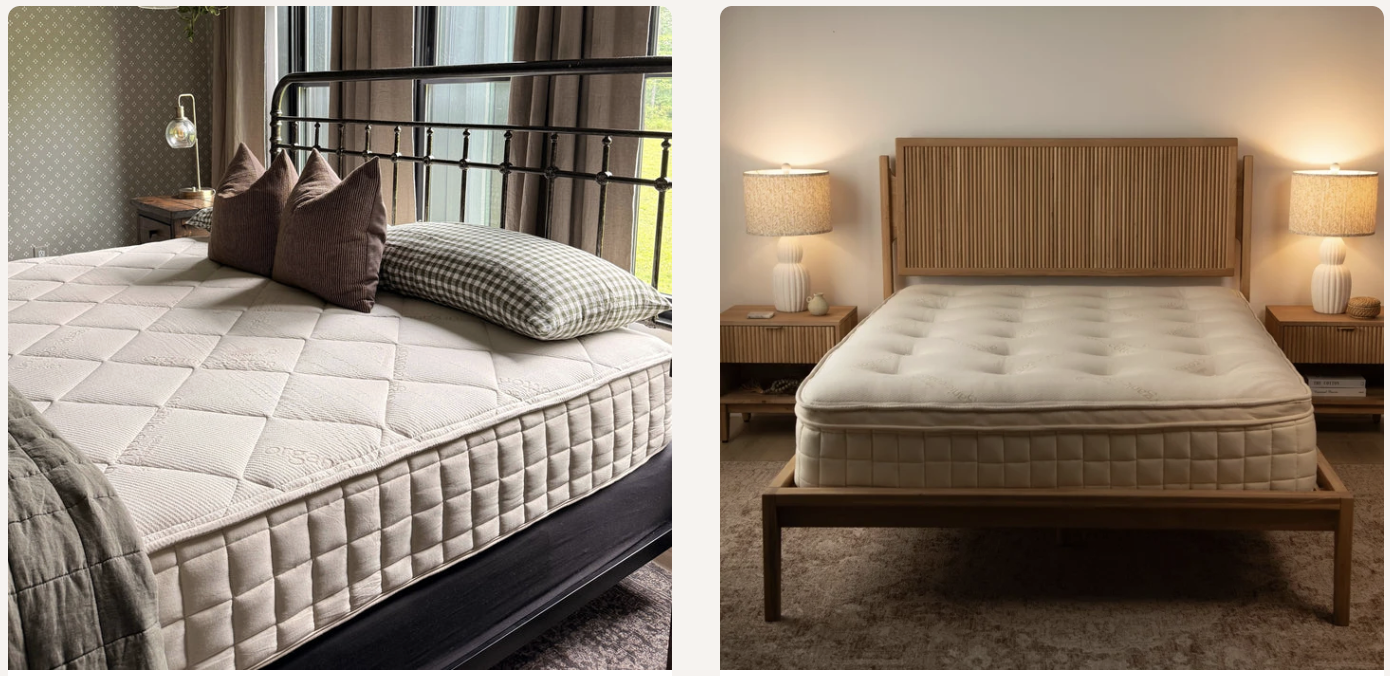
Your bedroom deserves to be part of that evolution. A clean, comfortable sleep environment — from blackout curtains and breathable bedding to a high-quality organic mattress like Naturepedic — isn't just about making your bedroom look more grown-up.
It's about creating a space that supports one of the most important things you do every single day: sleep.
Final Thoughts on a Sleep Routine That Actually Works
You don't need the perfect nighttime routine. Start with a consistent wake-up time. Give yourself a little space to wind down. Put your phone away slightly earlier. Make your bedroom dark and comfortable. And when you're ready to invest in your sleep setup, start with the thing you're actually sleeping on.
Because getting your life together in your twenties might involve career goals, budgeting, relationships, and figuring out what you're doing with your future — but sometimes it also looks like finally buying a really good mattress and going to bed on time.
About the Author

Nicole Booz is the founder and Editor-in-Chief of GenTwenty, GenThirty, and The Capsule Collab. She has a Bachelor of Science in Psychology and is the author of The Kidult Handbook (Simon & Schuster May 2018). She currently lives in Pennsylvania with her husband and three sons. When she’s not reading or writing, she’s probably hiking, eating brunch, or planning her next great adventure.
Website: genthirty.com