
How to Network Without Feeling Fake
We know that networking is so important, especially when we are just starting out in our careers. But why does it feel so awkward then? Shouldn't it feel more natural? Is there even a way to network without feeling fake?
We've all been there - walking into a networking event with tons of agita because we don't know anyone else there. Or we get the feeling like everyone is pretending to be more successful than they are.
Well, chances are, they may be, and that's where the phrase "fake it 'til you make it" come to play. These - and more - are all reasons that 20-somethings tend to avoid networking and networking events, because they feel inauthentic.
But it doesn't have to feel like that. In fact, effective networking isn't about being fake, extroverted or constantly self-promoting. It actually works best when you treat it like a relationship-building experience rather than self-promotion.
The Networking Icks and Misconceptions
So, why does networking even feel fake in the first place? Because networking feels uncomfortable when you're focused on what you can get out of it rather than prioritizing how you can connect with the other person. Additionally, there are some common misconceptions surrounding it:
- Thinking networking means collecting contacts
- Believing every conversation must lead to an opportunity
- Feeling pressure to impress people
- Comparing yourself to polished professionals online

Making it Easier to Network Without Feeling Fake
Can you network without feeling fake? 100%, yes. And here's how to do just that.
1) Redefine Networking as Relationship Building
That's right, the first step is to flip your perspective and redefine what networking actually means. Instead of asking yourself "Who can help me get ahead?" ask yourself things like "who can I learn from? or "who might I genuinely enjoy talking to?".
This works because it helps take the pressure off of the interaction. Even better, it creates more authentic conversations and leads to stronger long-term connections.
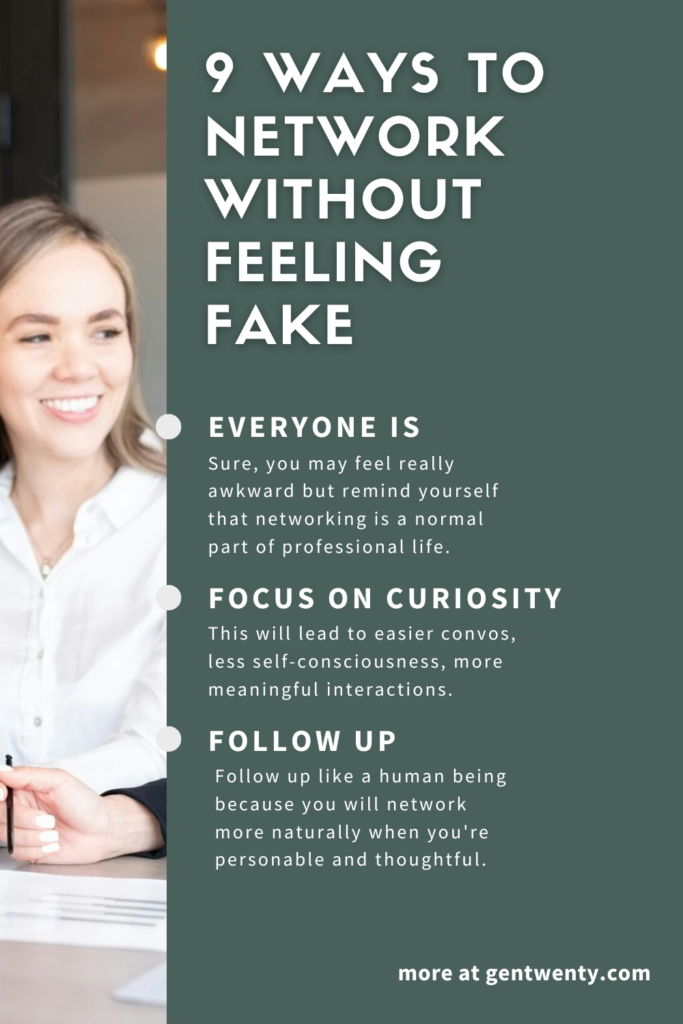
2) Focus on Curiosity, not Performance, to Network Without Feeling Fake
Of course you want to sound impressive to the other person, but if you push this too hard, it could be a big mistake. What should you do instead? Become genuinely curious about the other person and have the conversation flow naturally from there.
Ask them things like how they got into their field, what surprised them about their career. You could ask what skills have been the most valuable, and what would they do differently if they could. Framing the conversation like this will lead to easier convos, less self-consciousness, more memorable interactions and better learning opportunities.
3) Start Smaller than You Think
When you think of networking you may think of just large, conference types of events with loads of people. Sure, those can be really great networking opportunities - but it's not the only way to network.
There are plenty of smaller ways you can network with others, too. Talking to coworkers, reaching out to alumni, connecting with classmates, joining professional communities online and attending local meetups are all ways to network.
A lot of times, some of the most meaningful connections start through a coffee chat, LinkedIn message or an introduction from a friend. A good goal to have is to aim for one new professional conversation each month rather than trying to build a huge network overnight.

4) Remind Yourself that Everyone is Networking
Sure, you may feel really awkward introducing yourself to someone. But, even the most experienced professionals often feel awkward introducing themselves, too.
The person you are talking to may be just as nervous as you are, even if they aren't showing it. Don't think of networking as something you have to "get right"; instead think of it just as a normal part of professional life.
5) Give Before You Ask to Network Without Feeling Fake
A powerful networking principle is to look for ways to provide value to the other person first. Some great examples of this include sharing an article someone might enjoy, making an introduction, offering help on a project, supporting someone's work online or sharing useful resources.
Why does this work so well? Because people are naturally drawn to relationships that feel reciprocal rather than transactional. Small gestures really do often have the biggest impact, even when it comes to networking.
6) Don't Treat Every Conversation like a Career Opportunity
Know that some connections in your network won't lead you to jobs, internships or referrals - and that's okay. Interesting conversations with others can still teach you something valuable and help expand your perspective. Networking can feel much more genuine when the pressure is taken off of outcomes.
7) Follow Up like a Human Being
A very big as well as common mistake when it comes to networking is only reaching out when you need something. This won't foster the relationship at all - it'll likely turn the other person off. You can network without feeling fake more naturally when you're personable and thoughtful.
So how can you foster that relationship? Always send a thank-you note, share an update they might appreciate, or congratulate them on a milestone. You can also check in with them periodically. Consistency matters much more than perfection.
8) Build a Reputation, Not Just a Contact List
The strongest networks are built through trust and credibility, and both of those things take time. Consistently showing up, doing good work and being reliable will naturally create opportunities for you.
People are much more likely to recommend someone that they know and trust. They're not likely to suggest someone they met just once at an event and never heard from again.

9) Stop Trying to be The Most Interesting Person in The Room
Let's be real - a lot of networking anxiety comes from ourselves, because we feel this pressure to need to impress everyone. But in reality, most people respond better to authenticity than to a polished performance.
Instead of focusing on providing your value in every interaction, focus on having a good time and enjoyable conversation.
Final Thoughts on Networking Without Feeling Fake
Remember, the strongest professional networks aren't built through elevators pitches. Instead, they're built through genuine conversations, shared interests and relationships that grow over time.
Keep all of these things in mind the next time you're networking, and you shouldn't feel fake at all. You may just find yourself actually having a good time, too. The goal isn't to become a networking expert, instead it's to become someone that other people genuinely enjoy connecting with.

About the Author

Michelle graduated from Fordham University with a Bachelors of Arts '13 and a Master of Arts '14. She's currently working in corporate America with a side of freelance writing. She wants you to learn from her experiences and mistakes so your 20s can be your best decade. When she's not working, she's likely planning her escape to a tropical island.