
Creating a Cozy, Minimalist Bedroom for Stress Relief
Your bedroom should feel like a warm exhale at the end of a chaotic day—not another source of overwhelm. But for so many twenty-somethings, especially if you're juggling work, relationships, self-development, and the general “what am I even doing with my life?” vibes, the bedroom becomes a catch-all for clutter, laundry, and stress we haven’t dealt with yet.
A cozy, minimalist bedroom bridges that gap beautifully. It’s not about stark white walls or owning two shirts and a bedframe. Rather, it's about being intentional. Creating a space that feels peaceful, grounding, as well as soothing. A place your nervous system recognizes as safe the second you step in.

A Minimalist Bedroom for Resting, Not for Stressing
If you’ve been craving a reset, here are 12 listicle-style tips to design a cozy, minimalist bedroom that supports stress relief—inside and out.
1. Start With the Foundation: Upgrade to a Supportive Mattress (Hi, Lull!)
If your bedroom were a wellness routine, your mattress would be the eight hours of sleep part—pretty essential. A cozy minimalist space doesn’t work unless the basics work, and that starts with your bed.
A Lull mattress is an ideal foundation for a calm, minimalist bedroom because it’s designed to support your body, reduce pressure points, and create the kind of sleep experience that quiets stress rather than adding to it. Lull is known for its:
- Premium memory foam that cradles your body
- Built-in cooling features for hot sleepers
- Balanced support (not too soft, not too firm)
- Affordable price point for twenty-somethings upgrading their first “real” bedroom
When your mattress actually helps your sleep instead of sabotaging it, everything else in your space feels more peaceful. So, consider this your permission slip to invest in rest—your mind will thank you.
2. Declutter With Intention—Not Aggression
Minimalism isn’t about throwing everything away. Instead, it's about choosing what stays.
So, start with the things that make noise in your mind every time you see them:
- Overflowing nightstands
- Clothes that don’t fit or don’t feel like you
- Random items that got dumped in your “I’ll deal with that later” corner
Ask yourself: Does this earn a place in a room meant for rest?
Your bedroom should hold only what supports your calm. A clean, open environment signals safety to your brain—bringing cortisol levels down and also helping you relax faster.

3. Embrace a Soft, Neutral Color Palette as Part of a Minimalist Bedroom
There’s a reason spa environments always lean into neutral shades: they’re naturally calming.
Colors that work best in cozy minimalist bedrooms include:
- Soft beige
- Warm taupe
- Light gray
- Muted sage
- Soft blush
- Creamy white
- Dusty blue
These colors don’t overwhelm your senses. Instead, they create a soothing backdrop that feels fresh, airy, and grounding. However, if you love color, incorporate it subtly in one or two statement pieces—such as throw pillows or wall art.
4. Keep the Bedding Simple but Luxurious
Minimalist doesn’t mean boring. Your bedding can still feel luxe—just without the visual chaos.
Essential cozy-minimalist bedding includes:
- High-quality sheets in a neutral color
- A plush duvet or comforter
- One or two textured throw pillows
- A soft knit blanket at the foot of the bed
Think spa-like, but achievable on a twenty-something budget. When your bed feels inviting, you’re more likely to associate your room with rest rather than stress or overstimulation.
5. Reduce Visual Noise to Achieve a Minimalist Bedroom
Clutter isn’t just physical—it’s visual.
To create a peaceful bedroom, focus on removing anything that creates mental “buzz,” such as:
- Bright product labels
- Piles of cords
- Busy patterns
- Overfilled shelves
- Mismatched decor
Try concealing what you can in baskets or drawers. Choose matching hangers. Hide wires with cord clips or covers. The goal is a space where your eyes land gently—nothing demanding attention.
6. Bring Nature Inside
Nature is the original minimalist designer.
Adding natural elements helps reduce stress and also adds warmth to your room without clutter. Try incorporating:
- Fresh or dried eucalyptus
- A small plant on your nightstand
- A neutral ceramic vase
- A wooden tray or nightstand
- Natural fiber baskets
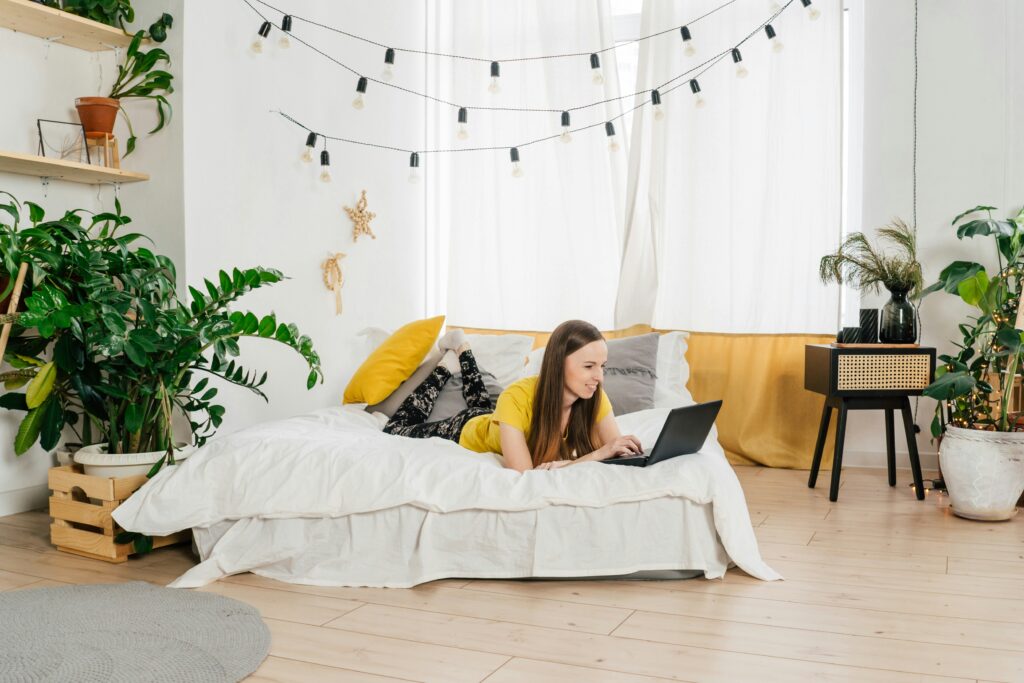
Plants especially have been shown to boost mood, improve air quality, and enhance relaxation.
Low-maintenance options include:
- Snake plants
- ZZ plants
- Pothos
- Philodendrons
- Dried lavender or pampas grass
Minimalist? Yes. Still cozy? Absolutely.
7. Layer Soft Lighting for a Minimalist Evening Calm Bedroom
Harsh overhead lighting is the enemy of a peaceful bedroom.
Instead, go for soft, layered lighting:
- Warm-toned LED bulbs
- Bedside lamps
- A floor lamp with a fabric shade
- Battery-powered candles
- Warm fairy lights or hidden strip lighting
Soft lighting helps your brain transition into “unwind mode,” making it easier to relax and fall asleep.
8. Keep Surfaces Clear (One Intentional Item Per Surface Rule)
This rule is a game-changer:
Only one meaningful, calming item belongs on each major surface.
Examples:
- Nightstand → a book + a vase
- Dresser → a candle + a framed photo
- Desk → a small plant + a lamp
Restricting surfaces gives your brain a break. Over time, you’ll notice you feel calmer and more grounded when you walk into your space.
9. Consider Soft Textures for Instant Coziness
Minimalism doesn't have to be stark. So, warm it up with textures that make your space feel like a hug.
Try adding:
- A cozy area rug
- Textured throw pillows
- A knit or boucle blanket
- Linen bedding
- Sheer curtains
These elements add dimension and comfort while keeping the overall aesthetic clean and simple.
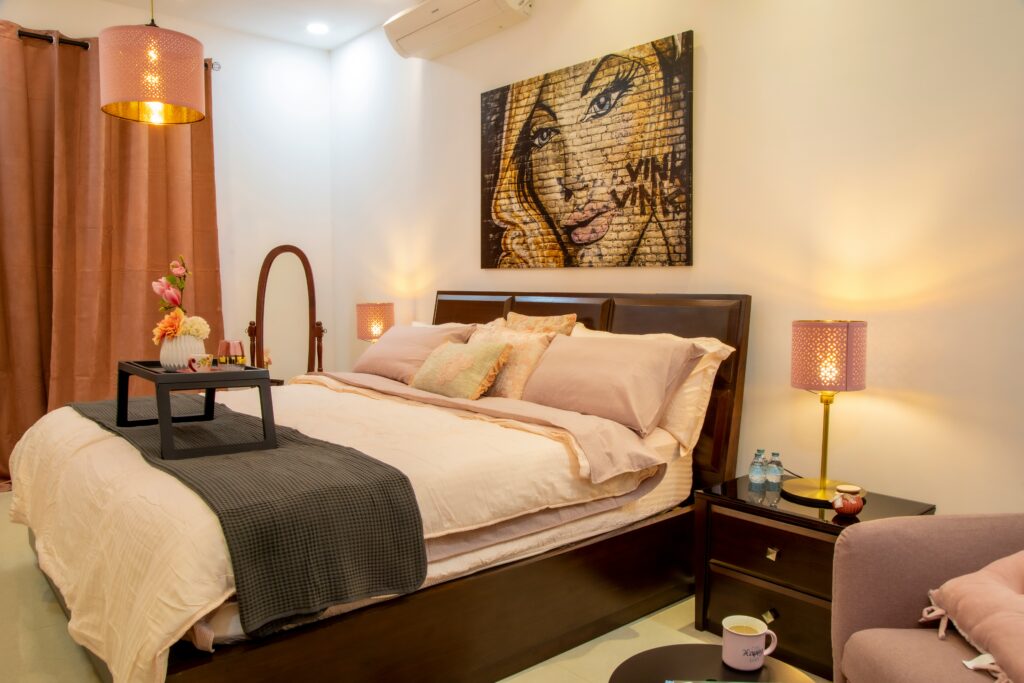
10. Create a Minimalist Bedtime Ritual Corner
A cozy minimalist bedroom becomes even more effective when it supports your mental health rituals.
Set up a tiny “wind-down station” with:
- A journal
- A book
- A calming candle
- A small basket to store them
Keeping your nighttime items contained prevents clutter and encourages you to actually use them. When everything has a place, the room works with you—not against you.
11. Incorporate Scent as a Stress-Reducer
Scent is powerful. It helps set the tone and signals your nervous system to relax.
Calming minimalist scents include:
- Lavender
- Vanilla
- Bergamot
- Sandalwood
- Cedar
- Eucalyptus
Use them through:
- A diffuser
- A candle
- Linen spray
- Dried herbs
Choose one signature scent so your brain begins associating it with rest. This creates a consistent, comforting atmosphere.
12. Make Your Minimalist Bedroom a “Phone-Light Zone”
Let’s be honest: most of our stress lives in our phones.
A minimalist bedroom works best when you reduce digital clutter too. Try:
- Charging your phone across the room
- Using a sunrise alarm clock
- Limiting screens 30–60 minutes before bed
- Keeping your bed tech-free
This small shift has a massive impact on your anxiety levels, focus, as well as sleep quality.

13. Edit Regularly—Your Space Should Grow With You
Your bedroom should evolve as your life does.
Take a few minutes at the end of each month to:
- Clear surfaces
- Donate unused items
- Reassess your decor
- Refresh bedding
- Adjust lighting as seasons change
Minimalism isn’t a one-and-done project. It’s an ongoing relationship with your space.
14. Add Personal Touches—Just Not Too Many
Minimalist bedrooms still deserve personality. The key is intentionality.
Try adding 2–3 meaningful elements:
- A framed photo
- Art that calms you
- A special object from a loved one
- A handmade ceramic piece
- A cozy reading lamp
Too many “personal items” can feel chaotic, but thoughtfully chosen pieces create emotional comfort.
15. Let Your Mattress Be the Hero of the Minimalist Bedroom
Circling back to where it all begins: your mattress sets the tone for everything else.
A cozy, minimalist bedroom is designed for rest, and that rest starts with support, comfort, and consistency. A Lull mattress delivers exactly that—making your space feel like a retreat instead of a pit stop.
When your bed is comfortable and supportive, your body relaxes. When your senses feel balanced and uncluttered, your mind follows. And when stress has fewer places to hide, you sleep better, think clearer, and show up as the best version of yourself.
Final Thoughts: Your Bedroom Should Support You, Not Stress You Out
You deserve a space that feels like sanctuary—not another thing on your to-do list. Creating a cozy, minimalist bedroom is one of the most effective, affordable ways to support your mental health in your twenties. It’s grounding. It’s peaceful. And honestly? It just feels good.
Start with your Lull mattress, clear what you don’t need, and also layer in calming colors, textures, and lighting. Little by little, your bedroom becomes a place where your body unwinds, your mind exhales, and your stress melts away.
And when your space supports you, everything else in life feels a little more manageable.
About the Author

Anna is a twenty-something living in the south. She's passionate about family, crafting, and continuing her education beyond her college degree.