
13 Tips for Achieving an Even Work-Life Balance
Juggling work, family, hobbies and social life can feel like you’re constantly being pulled from various directions. This can leave your work-life balance in complete shambles.
Finding that sense of having a fulfilling life and career can feel impossible, but it doesn’t have to be. These 13 strategies can help positively impact your day-to-day, allowing you to feel more in control of your life.
What Does Work-Life Balance Feel Like?
Work-life balance is highly subjective. For a young professional who craves career advancement, this might mean dedicating extra work hours while ensuring time for personal endeavors.
Conversely, a “work-life balance” for someone in their fifties who has achieved a stable career could mean strictly adhering to a 9-5 schedule and dedicating evenings to family and hobbies.
Despite the nuances, some signs that may indicate you’ve achieved a good work-life balance include:
- Having control over your time
- Consistently taking time off
- Disconnecting from work on weekends and holidays
- Feeling confident in where you are

Telltale Signs You May Need Better Work-Life Balance
Work and personal life demands can feel relentless at times. You may constantly juggle responsibilities, feeling like there’s always something to do. If that resonates, pause and reflect on whether you resonate with the following signs:
1) You’re Burned Out
Burnout is a state of physical, mental and emotional exhaustion caused by prolonged stress. It signals that your resources have been completely depleted by work demands, leaving you feeling drained, unable to sleep, irritable and disconnected. Heavy workload and excessive overtime can contribute to feelings of burnout.
2) You Neglect Relationships Without A Work-Life Balance
Do you cancel plans, ignore calls or feel too drained to be present at home because of work? Your relationships are your anchors, and when they start to fray because of work, it’s a glaring sign that things are out of whack.
Remember, relationships require time and effort to maintain. If your friends and family members are starting to notice it, it’s time to reevaluate your priorities.
3) You Have No Time for Yourself
Think about the little things you do just for you — reading a book, hitting the gym, doing an elaborate skin care routine or simply zoning out a bit. If your interests have taken a backseat due to work obligations, it’s a sign that your balance is off. In today’s fast-paced world, “me time” is necessary for your health, happiness and life satisfaction.
4) You Constantly Think About Work
Have you ever tried to relax on a weekend, but your mind keeps stressing about Monday? Constantly thinking about work, even at home, indicates that it has seeped into your life.
You may also find yourself refreshing your email list or answering your manager’s messages late into the evening. If work concerns prevent you from unwinding, it might be time to set boundaries.
5) You Get Sick Often
Prolonged stress can manifest in various ways, including headaches, upset stomach, back pain, shortness of breath, and getting colds and infections often. Experiencing any of the signs can be your body telling you to slow down and take care of yourself — an important message you must not ignore.

6) You Don’t Take Vacation Leaves
Your paid time off (PTO) is there for a reason. It’s your chance to travel, spend time with loved ones and run errands. When you consistently let those days pile up, you either feel you can’t step away from work or are too exhausted to make plans. While being at work is important, remember that taking care of yourself is also crucial.
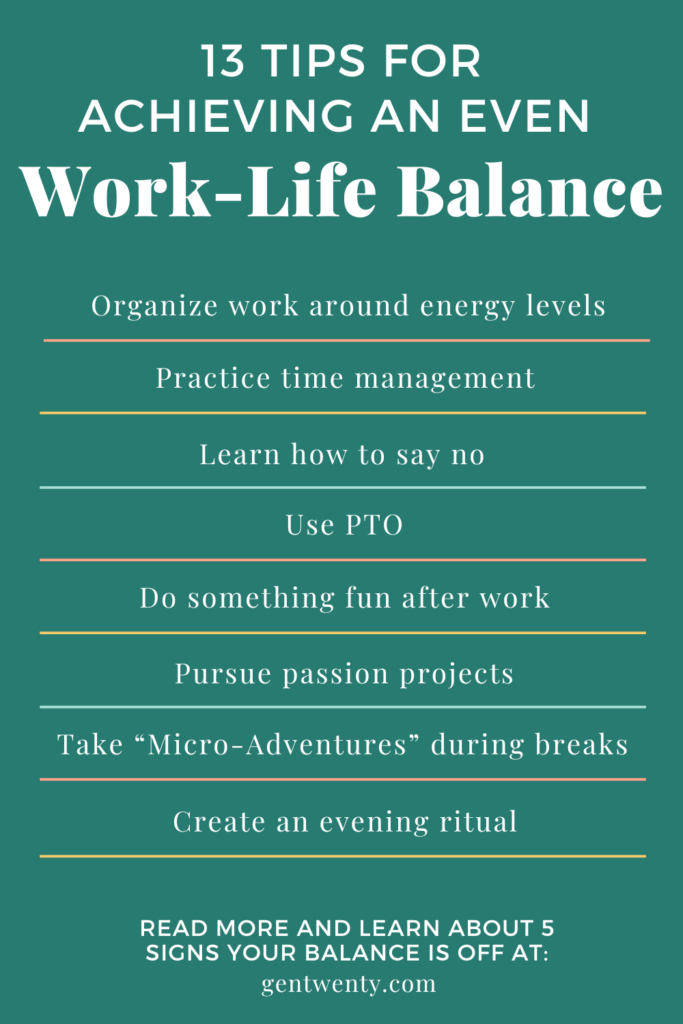
13 Strategies for Achieving Work-Life Balance
Work-life balance is attainable with patience and self-discipline. Consider these effective tips to restore the balance between your personal and professional life.
1) Organize Work Around Your Energy Levels
Productivity is related to your energy levels. Identify your “peak energy” hours — or when you feel more productive — and schedule deep work for those periods. Do low-value tasks like responding to emails when your energy is at its lowest. Map your energy and work levels in a spreadsheet for a few weeks and identify patterns to help you make more informed decisions.
For example, if you’re a morning person, tackle critical tasks first. After lunch, your energy levels may decrease, making it a great time to respond to emails or organize files.
2) Practice Time Management
With various time management tools, it can be challenging to know which one will work best. At this point, it’s ideal to use scientifically proven techniques.
One such method is the Eisenhower Matrix, which helps you identify tasks based on urgency and importance. Differentiating between urgent and important assignments can help you determine what to prioritize and which tasks might be better delegated to other team members.
Explore automating repetitive tasks to save time and effort. Set reminders, automate social media posts, create canned responses and design spreadsheet templates for reports. Set time constraints for task completion to force your brain into completing them.
Distractions are your biggest productivity roadblocks. When you lose focus, it can be challenging to get back into the groove. Set your phone to silent mode and put it somewhere far from you. Work with headphones, as people are less likely to approach you with a nonurgent concern.
3) Plan, but Make Time for Spontaneity
Good news for those with Type A personalities — it’s possible to plan and make room for spontaneity with a planner. First, plan loosely. List everything you want to accomplish this month, then give yourself all 30 days to finish them. Make sections like “Things to Accomplish by Saturday” or “Start These Things in May” to ensure productivity while giving yourself some leeway.
Next, take action. Say yes to new experiences. Try new activities, accept event invitations, or try a new restaurant each month. You can also introduce small yet impactful changes to your daily routine — take a different route to work or try a new coffee drink.

4) Learn How to Say No to Maintain Your Work-Life Balance
It’s natural to be a people pleaser at work, even more so if your manager asks a favor. However, you may take on more than you can handle. If you can resonate, it’s time to embrace the power of “no.” It’s a powerful boundary leading to a healthier, happier work environment.
The more you have on your plate, the harder it is to be productive. You become more overwhelmed or resentful when you continuously accept tasks outside your scope. To prevent this, learn to say no when busy or the task doesn’t align with your work.
Be clear, direct and polite with your no to avoid misunderstandings. When responding to your boss, specify your tasks to help them understand your situation. It can also help them de-prioritize other work in favor of the new assignment. If possible, offer a different solution to show support.
5) Do Something Fun After Work
Do you spend your after-work hours bingeing on TV shows or doom-scrolling on social media? While they sound relaxing, they are huge time sucks. Plus, staring at the screen can affect your sleep quality. To prevent these passive pastimes, opt for more active and fulfilling ones.
Joining a fitness class is ideal for workout junkies or individuals who want to be more active. It helps you stay active, and you get to meet new people. If you’re feeling spontaneous, go for a random drive around the city and admire new sights.
When you miss your loved ones, plan a dinner with your high school best friend and catch up. These activities aim to break your passive routine and add excitement to your life.
6) Use Your PTO
Vacations provide time for relaxation and a break from work. However, the workaholic side of you may make you feel anxious. Leaving work and returning with a mountain of tasks can be daunting, making it easier to keep working. If you don’t take a break, you risk burnout, which translates into decreased productivity and vulnerability to sickness. Your work and your health suffer.
That dream vacation to a country on your bucket list? Book it and file that leave. This applies just as much, if not more so, if you’re a manager.
In some workplaces, there can be an unspoken expectation of constant availability, but leaders are humans, too. A study showed that over 50% of managers across industries also experience burnout, making vacation necessary for your well-being and effectiveness.
7) Pursue Passion Projects
Think about the hobbies you put on the back burner because of your busy work schedule. Set aside time for them to bring joy into your life. Passion projects cover various activities, including painting, writing or gardening. It doesn’t necessarily have to be something you need to make money off, but it’s better if it could benefit others.
If you want to explore new activities, look for gaps in your community that you can address through a passion project. Choose something you care deeply about and make time for it. Collaborate with others to mobilize your plans quickly.

8) Leave Your Work at the Office for a Better Work-Life Balance
When you leave work at office, you give yourself space to fully engage with and enjoy your personal life. This mental and emotional detachment frees your mind from constant work-related thoughts, making you more present in your relationships with family and friends.
Creating a brief ritual to conclude your day helps your mind slowly disengage from work. You may clean your desk, review your accomplishments or outline tasks for the next day.
If you work from home, move away from your desk when your shift ends. This can help delineate the boundaries between work and home modes.
9) Inject “Micro-Adventures” During Lunch Breaks
The workday sometimes feels like a long stretch of the same tasks and environment. A micro-adventure breaks the monotony and injects an exciting element into your day, allowing you to explore your local area, discover a hidden gem or try something new during your lunch break.
There are many ways to do this — take a walk or do some light stretching at a nearby park. Instead of your usual lunch spot, try out a new local restaurant or cafe.
You can also use your spare time to engage in a quick hobby — read a chapter of a book outside your office, learn a few phrases in a new language or sketch while being inspired by nature.
10) Create an Evening Ritual
Excessive screen time can cause health problems, including eye strain, neck and shoulder pain, anxiety and depression. Instead of adopting a “no devices after X hour” rule, which can feel restrictive, commit to a calming evening ritual that doesn’t involve screens.
Prepare a satisfying, comforting dinner, brew an herbal tea, roll out your mat for yoga or write a few lines in your journal. Do any calming activity that doesn’t involve technology to help you fall asleep quickly and naturally.
11) Live a Healthy Lifestyle
Maintaining healthy habits can feel impossible when balancing a demanding schedule. It’s so easy to order fast food or sleep until the last minute when you’re exhausted from yesterday. Fortunately, there are ways to sneak exercise and healthy eating into your day without feeling overwhelmed.
Meal prepping is an excellent way to ensure you eat the right foods. Prepare meals with lean chicken breast, light stir-fry and vegetables to help you resist the temptation of fast foods. Always bring a reusable bottle to keep yourself hydrated wherever you go.
Exercise is an effective stress buster, making it an essential part of your routine. Do light stretches in the morning, go for an afternoon stroll or run around the neighborhood after work.

12) Embrace “Good Enough” at Work
Are you a perfectionist or a people pleaser who believes anything less than perfection is not enough? It’s time to break the habit today. Believing that you have to give 100% in every task may cultivate a fear that you’re doing less. Think of it like running a marathon at sprint speed — you’ll burn out fast and likely won’t even finish the race.
No human is perfect, and you don’t have to be. However, it doesn’t mean you should slack off, either. Try to work smart, not just hard, and look for efficient ways to accomplish tasks. Are there better processes or automations you can implement? A strategic approach can yield better results with less effort.
13) Work With a Mental Health Professional
Life can feel like a never-ending cycle of stress without work-life balance. If you’re constantly stressed or overwhelmed, consider seeking professional help. A mental health worker can ask the right questions and help you manage your anxiety.
They won’t downplay your concerns, invalidate your feelings or make you feel like you’re overreacting. They’re a solid option if you want someone who can listen empathetically without judgment.
Find Your Work-Life Balance
Finding what feels right and sustainable for you is the key to a better work-life balance. It’ll take some time, experimenting and kindness toward yourself along the way, but the results will be worth it.

About the Author

Mia Barnes is a freelance health and lifestyle writer from the East Coast. Mia is also the Founder and Editor-In-Chief of Body+Mind Magazine. She enjoys writing about topics related to self-care, mindful living, and overall wellness. When not writing, you can find Mia reading romance novels, trying new recipes or practicing yoga.
Website: www.bodymind.com/