Small Bathroom, Big Upgrade: Smart Ways to Transform Your Space
You notice it when your elbow hits the wall again while reaching for a towel, and for a second, you just stand there, slightly annoyed, like this space should not feel this tight. Small bathrooms have a way of making simple routines feel awkward, and over time, people just adjust instead of fixing what is clearly not working.
The thing is, most of these spaces were not designed with daily use in mind. They were built to fit, not to function well. Once you start paying attention, you see how much effort is being wasted on small movements, and how a few changes could make the room feel easier to live with, even if the size never changes.
Seeing the Limits Before Changing Anything
A small bathroom does not always need to be rebuilt, but it does need an honest look at what is not working. Most issues come from the layout. Fixtures sit where they were easiest to install, not where they feel right to use, and storage ends up crammed into whatever space is left. It feels normal until you pay attention.
People think they need more room, but often they just need to use it better. You notice the wasted motion first. Reaching, turning, adjusting. Even lighting and darker surfaces can quietly make the space feel tighter than it already is.
Planning Around Real Use, Not Just Looks
When changes are planned properly, the focus shifts from appearance to function first, even though most people start with how they want the room to look. When a bathroom remodeling project is handled properly, it enhances the functionality of the space significantly. Simple layout changes can have a dramatic impact. Sometimes a sink is moved slightly, or a cabinet is replaced with something that opens differently, and suddenly the room feels less crowded.
There is also a practical side that does not get enough attention. Water flow, ventilation, and drainage systems all affect how well the space holds up over time. If those systems are ignored, the upgrades will not last the way people expect. It is not the most exciting part of the process, but it matters. For those trying to understand how these decisions come together, it helps to look at how experienced teams approach the process. Professional bathroom remodelers focus on the layout, materials, and daily use together, rather than as separate choices that are made in isolation.
Making Space Without Expanding the Room
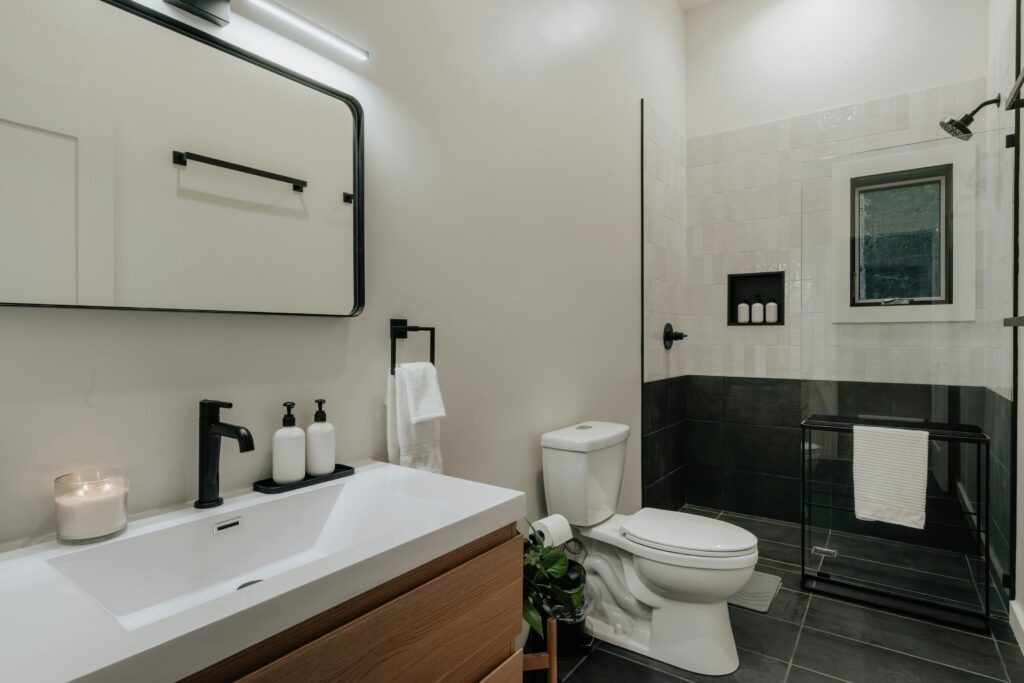
The idea of creating space in a small bathroom often sounds unrealistic, but it happens more through perception than actual square footage. Wall-mounted fixtures are one example. When sinks or toilets are lifted slightly off the floor, even by a small margin, the room feels less crowded. It is not that the space grows, but it reads differently to the eye.
Storage plays a similar role. Bulky cabinets tend to take over the room, even when they are not fully used. Replacing them with slimmer options or built-in shelving can open things up. It is not always about adding storage, but about using it in a way that does not interfere with movement.
Mirrors also contribute more than people expect. A larger mirror, placed well, can reflect light and make the room feel wider. It is a simple adjustment, but it works because it changes how the space is seen, not how it is built.
Choosing Materials That Do Not Work Against You
In smaller spaces, materials need to do more than just look good. They have to hold up under constant use while also helping the room feel less confined. Large tiles, for example, can reduce the number of visible lines, which makes surfaces appear smoother and less busy. It is a subtle effect, but it makes a difference.
Glossy finishes can reflect light and brighten the room, though they need to be balanced so the space does not feel too sharp or cold. Matte finishes, on the other hand, feel softer but can absorb light if overused. Finding a middle ground is usually the goal, even if it takes a bit of trial and error.
Color choices follow the same pattern. Lighter shades tend to open things up, but they also show wear more easily. Darker tones feel grounded but can make the room feel smaller if not balanced with good lighting. There is no perfect answer, just a set of trade-offs that need to be considered.
Fixing Movement and Flow
One of the less obvious problems in small bathrooms is how people move through them. The layout might look fine on paper, but in practice, it can feel restrictive. Doors that swing inward, cabinets that block pathways, and fixtures that sit too close together all affect how the room functions.
Changing the direction of a door or replacing it with a sliding option can free up space without altering the structure. It is a small change, but it often has a noticeable impact. The same goes for adjusting fixture placement, even slightly. A few inches can change how easily someone moves through the room. These adjustments are not always planned from the start. Sometimes they come up during the process, when the space is being reworked, and its limitations become more obvious. It is part of why flexibility matters when making upgrades.
Keeping Things Simple Enough to Maintain
A well-upgraded bathroom should not feel like it needs constant attention. Maintenance is often overlooked during planning, but it becomes important once the work is done. Surfaces that are easy to clean, fixtures that do not trap moisture, and layouts that allow access for repairs all make a difference over time. People tend to focus on how the room looks right after the work is finished, but the real test comes later. If the space is difficult to maintain, it will start to feel worn again much sooner than expected. Simpler solutions tend to last longer, even if they are not as visually striking at first.
Over time, the impact of these upgrades becomes clearer. The room feels easier to use. Movements that once felt awkward become natural. The space does not feel bigger in a literal sense, but it works better, which often matters more. Small bathrooms will always have limits, but those limits can be managed. With careful adjustments and a focus on real use, the space can be reshaped into something that feels less restrictive and more practical, even if the walls never move.