
How to Practice Gratitude at Work (Even If You Don’t Love Your Job)
Gratitude is one of those buzzwords we often hear in the context of wellness, journaling, or yoga classes. It’s about pausing, noticing the good, and appreciating what we have. But when it comes to work—especially if you’re in a job you don’t exactly love— to practice gratitude at work can feel like the last thing on your mind.
If you’ve ever scrolled LinkedIn and seen people gushing about their “dream jobs,” you know how frustrating it can feel when you’re stuck in a role that doesn’t align with your passions or long-term goals. The truth is, not every job is perfect, and sometimes we find ourselves in positions that are less than fulfilling. That doesn’t mean we can’t benefit from practicing gratitude at work.
In fact, gratitude is a powerful tool for navigating challenging environments. Studies show that gratitude improves focus, resilience, and even job satisfaction. It helps shift your perspective from frustration to opportunity, allowing you to manage stress and stay grounded while building the skills you’ll carry into your next chapter.

12 Ways You Can Practice Gratitude at Work
So how can you practice gratitude at work—even when you don’t love your job? Here are practical, professional-focused strategies to help you infuse meaning and positivity into your daily routine.
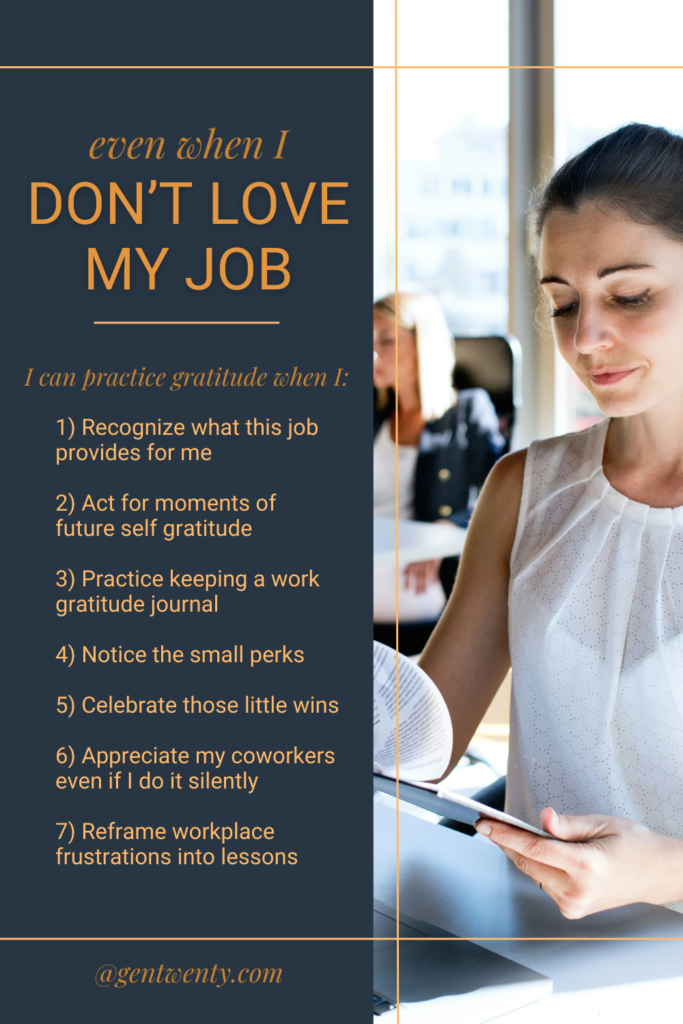
1. Recognize What the Job Provides (Even If It’s Temporary)
Sometimes the best place to start with gratitude is the most basic. Maybe this job pays your bills, provides health insurance, or offers flexible hours that give you time for other passions. Even if you’re not excited about the tasks themselves, the stability your job provides is worth acknowledging.
Try making a short list of the tangible benefits your job gives you—whether that’s a paycheck, skills development, or networking opportunities. Reframing your role as a stepping stone instead of a dead end helps you see it as part of your journey, not the final destination.
2. Start Your Workday With a Gratitude Ritual
How you start your workday shapes your mindset. Instead of diving straight into emails or meetings, pause for a few minutes to set a positive tone.
Try one of these quick rituals:
- Write down three work-related things you’re grateful for (a helpful teammate, a resource, the fact you can work remotely).
- Say a silent “thank you” for something simple, like having a working laptop or coffee on your desk.
- Open your calendar and find one thing in the day ahead that you can appreciate (like a lunch break or a meeting with a supportive coworker).
This tiny shift sets your brain to look for the positives instead of focusing on frustrations.
3. Appreciate Your Coworkers (Even Quietly)
Even if you don’t love your role, chances are there’s at least one person at work you can appreciate. Maybe it’s the colleague who shares memes in the group chat, the manager who gives clear directions, or the intern who brings fresh energy.
Gratitude at work doesn’t always mean grand gestures. A simple “thanks for explaining that” or “I really appreciate your help with this project” can go a long way. Expressing gratitude toward others not only improves your relationships but also strengthens your own sense of connection.
If direct expression feels awkward, practice silent gratitude. Notice and mentally thank the people who make your day easier. Over time, you may feel more comfortable sharing those thoughts out loud.

4. Practice Keeping a Work Gratitude Journal
Journaling is a classic gratitude practice, and it can be tailored specifically to your professional life. Instead of focusing on your personal life, dedicate one notebook or digital doc to work.
At the end of each day, jot down one to three things you appreciated at work. Examples could be:
- “Grateful that my manager let me leave early for an appointment.”
- “Thankful for a smooth Zoom call without tech glitches.”
- “Appreciated that a coworker brought donuts to the office.”
This practice trains your brain to scan for small positives, even in environments you don’t love. Looking back on these entries can also shift your perspective when you’re feeling particularly drained.
5. Reframe Frustrations Into Lessons
Work can be stressful, no doubt about it. But practicing gratitude doesn’t mean ignoring problems—it’s about finding what you can learn from them.
Instead of focusing on how annoying your micromanaging boss is, consider what the experience is teaching you about leadership styles. Instead of resenting repetitive tasks, appreciate the chance to master a skill you’ll never forget.
Reframing challenges as lessons helps you view your current role as a teacher rather than a trap. You don’t have to love every part of the job to acknowledge the growth it offers.
6. Celebrate Small Wins to Practice Gratitude at Work
When you’re not in your dream job, it’s easy to overlook accomplishments. But celebrating small wins is a way of practicing gratitude for your own efforts and progress.
Did you finally clear your inbox? Wrap up a tricky report? Make it through back-to-back meetings without zoning out? Take a moment to acknowledge it. Treat yourself to a nice coffee, step outside for fresh air, or simply pause to give yourself credit.
Celebrating progress, no matter how small, reinforces gratitude for your ability to keep moving forward—even in an environment you don’t love.

7. Notice the Perks You’d Miss If They Were Gone
Sometimes gratitude comes into focus when we imagine the absence of what we have. Think about aspects of your job you’d miss if they suddenly disappeared. Maybe it’s your Friday payday, the free snacks in the breakroom, or the ability to work from home a few days a week.
Noticing these “hidden perks” helps you shift attention from what’s missing to what’s already working for you.
8. Create a Gratitude Ritual With Your Team
If you feel comfortable, suggest incorporating gratitude into your team culture. This could look like starting meetings with a quick round of “wins of the week,” or ending Friday check-ins by acknowledging something positive about a colleague’s work.
It doesn’t need to be cheesy or forced—it can be as simple as encouraging shoutouts in Slack or having a “gratitude wall” where people can leave notes. Teams that celebrate each other often see stronger collaboration and morale.
9. Use Gratitude to Manage Stress
Work stress is unavoidable, but gratitude can serve as a counterbalance. When you feel overwhelmed, pause and name three things you’re thankful for in the moment. Maybe it’s a helpful coworker, a functioning printer, or the fact that the meeting ended early.
This doesn’t erase the stress, but it gives your brain a break from spiraling negativity and helps you reset with perspective.

10. Look for Gratitude Outside of Work Hours
Sometimes the best way to practice gratitude at work is actually outside of it. When you clock out, intentionally notice how your job supports your life beyond the office. Maybe your paycheck covers rent, your hours allow you to take an evening class, or your job’s stability gives you the freedom to plan a trip.
Recognizing how work supports your larger goals can make showing up each day feel more purposeful—even if the tasks themselves aren’t fulfilling.
11. Practice Gratitude for Your Future Self
One of the most empowering ways to practice gratitude at work is to think about your future self. Even if you don’t love your current job, you’re building resilience, skills, and a track record that your future self will thank you for.
Be grateful for the discipline you’re developing, the references you’re earning, and the professional story you’re writing. Gratitude doesn’t just have to be for what’s happening now—it can also be for the person you’re becoming.
12. Shift Your Perspective From Scarcity to Growth
It’s easy to focus on what your job isn’t. It’s not your dream role, not paying as much as you’d like, not perfectly aligned with your degree. But gratitude asks: what is it giving you? What skills, experiences, or connections can you carry forward?
Shifting from scarcity to growth helps you feel less stuck and more empowered. Gratitude becomes a tool for seeing the bigger picture instead of dwelling on the limitations.

Why Practicing Gratitude at Work Matters
Practicing gratitude at work isn’t about sugarcoating or pretending everything is perfect. It’s about resilience, perspective, and protecting your mental health. Gratitude doesn’t erase the challenges of a job you don’t love—but it helps you navigate them with less stress and more purpose.
When you build gratitude into your workday, you shift the focus from what drains you to what sustains you. You start to see opportunities instead of only obstacles. And even if the job isn’t your forever role, you create a foundation of appreciation that makes you more effective, connected, and prepared for whatever comes next.
Final Thoughts on Ways to Practice Gratitude at Work
You don’t have to love your job to practice gratitude at work. By noticing what your job provides, appreciating coworkers, celebrating small wins, and reframing frustrations into lessons, you can build a gratitude practice that supports both your professional growth and your mental health.
Gratitude doesn’t mean settling—it means finding value where you are, while still keeping your eyes on where you’re headed. Think of it as a mindset shift that allows you to make the most of the present moment while preparing for the future.
So the next time you feel frustrated or unmotivated at work, pause and ask: What can I be grateful for right now? The answer might be small, but it could be enough to change the way you experience your day.
Because ultimately, gratitude at work isn’t just about liking your job—it’s about empowering yourself to thrive no matter where you are on your career journey.

About the Author

Nicole Booz is the founder and Editor-in-Chief of GenTwenty, GenThirty, and The Capsule Collab. She has a Bachelor of Science in Psychology and is the author of The Kidult Handbook (Simon & Schuster May 2018). She currently lives in Pennsylvania with her husband and three sons. When she’s not reading or writing, she’s probably hiking, eating brunch, or planning her next great adventure.
Website: genthirty.com