
Financial Red Flags in Relationships No One Talks About
There are a lot of conversations we’ve normalized having in relationships—communication styles, love languages, emotional availability. But money and finances? That’s still the topic people tend to dance around, especially early on.
It can feel too personal, too invasive, or even a little unromantic, so instead, we notice things, brush them off, and tell ourselves we’re being “chill.” But here's where we can get in trouble with some financial red flags in relationships that we should have paid attention to.
Financial Red Flags in Relationships Flying Under Your Radar
The reality is that financial habits are rarely just about money. They reflect values, priorities, boundaries, and long-term thinking. And while no one expects their partner to have it all figured out, there are certain financial red flags that tend to go unspoken—but can quietly shape the entire foundation of a relationship.
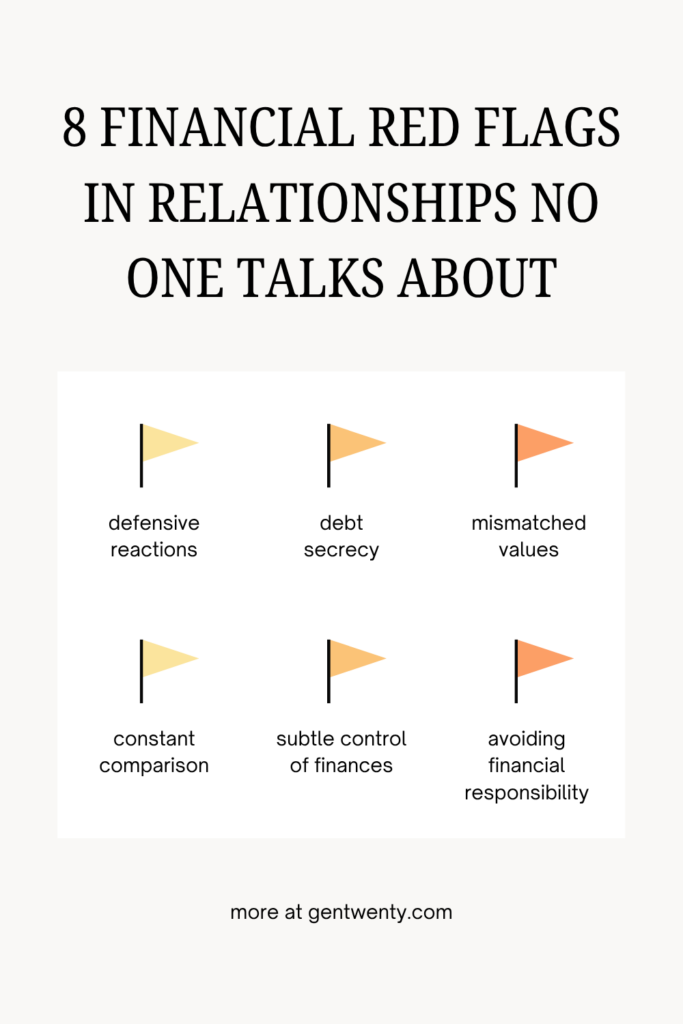
1) Debt Secrecy
One of the biggest (and most overlooked) red flags is secrecy around debt. Debt itself isn’t inherently a problem—student loans, credit cards, and medical bills are incredibly common. The issue is when someone goes out of their way to hide it or becomes defensive when it comes up.
If you’re months into dating and still feel like you don’t have a general sense of their financial reality, that’s worth paying attention to. Financial transparency doesn’t mean sharing exact numbers right away.
But, it does mean being honest when things start getting serious. Avoidance or dishonesty here can lead to much bigger trust issues down the line.

2) Chronic Overspending
Another subtle but telling sign is chronic overspending paired with a casual attitude about it. Everyone splurges sometimes, and enjoying your money is part of life.
But if someone is constantly living beyond their means it can signal a lack of accountability. Take notice of things like racking up credit card balances, impulsively spending, or joking about being “bad with money” without any intention of changing
Over time, this doesn’t just impact their finances. It can create stress, imbalance, and even resentment, especially if you’re someone who values stability or is working hard to build it.
3) Financial Dependency Without Balance
Financial dependency is another area that often gets misunderstood. There’s nothing wrong with supporting a partner during a tough time or having different income levels in a relationship. But when one person consistently relies on the other without contributing in meaningful ways—financially or otherwise—it can shift the dynamic.
If there’s no plan, no effort toward independence, and no acknowledgment of the imbalance, the relationship can start to feel less like a partnership. Instead it feels more like an obligation.
4) Mismatched Money Values are Financial Red Flags in Relationships
This red flag doesn’t always show up dramatically at first. It might look like small differences—one person prioritizes saving while the other prioritizes experiences, or one prefers budgeting while the other prefers spontaneity.
On the surface, it can even feel balanced. But over time, if those differences aren’t addressed, they can lead to ongoing tension.
5) Avoiding Financial Responsibility
Another red flag that doesn’t get talked about enough is a lack of financial curiosity or responsibility. If someone actively avoids learning about their finances it often falls on the other person to carry that mental load. Watch out for someone who ignores bills, doesn’t track spending, or dismisses important conversations as “boring”.
In the short term, it might feel easier to just handle things yourself. But in the long term, it can feel exhausting to be the only one planning ahead and thinking about the future.

6) Defensive or Dismissive Reactions
It’s also worth paying attention to how someone reacts to conversations about money. Do they shut down, get defensive, or turn it into a joke? Or are they open, even if they’re still figuring things out?
You don’t need a partner with perfect financial habits—you need someone who is willing to engage, reflect, and grow. The ability to have honest, sometimes uncomfortable conversations about money is so important. Often more important than the numbers themselves.
7) Subtle Financial Control is a Financial Red Flag in Relationships
Another dynamic that can quietly become problematic is financial control. This can show up in subtle ways, especially early on.
Maybe one person insists on paying for everything but uses it to make decisions or set expectations. Maybe they discourage you from spending your own money in certain ways or make comments that feel more judgmental than supportive.
Financial generosity is one thing, but when money becomes a tool for control or influence that's entirely different. It’s a sign of a deeper imbalance that shouldn’t be ignored.
8) Constant Comparison or Pressure
There’s also a version of financial discord that looks like constant comparison or pressure. If a partner often comments on how much you earn, how you spend, or what you “should” be doing financially it can erode confidence over time. This is especially bad if done in a way that feels critical rather than collaborative.
A healthy relationship should feel like a team effort, not a performance review. You're looking for a partner that will build you up in all areas of life, even finances.
Why These Financial Red Flags in Relationships Matter
One of the hardest truths about financial red flags is that they rarely feel urgent in the beginning. It’s easy to rationalize them away when everything else feels good. You tell yourself it’s not a big deal, that people grow, that things will naturally sort themselves out.
And sometimes they do. But more often, unaddressed financial habits don’t just disappear. Instead they become patterns that are harder to change once your lives are more intertwined.

It’s important to approach this topic with nuance. Everyone comes into relationships with different financial backgrounds, levels of education, and experiences. Some people were never taught how to manage money, while others are actively trying to unlearn unhealthy habits.
Final Thoughts on Financial Red Flags in Relationships
A red flag isn’t always a dealbreaker—it’s a signal. What matters is how it’s handled. Is there awareness? Effort? Willingness to improve?
The goal isn’t to find someone with a perfect credit score or a flawless budget. It’s to find someone whose approach to money feels compatible with yours. Then you want to find someone who is also willing to build something sustainable together.
Because at the end of the day, money touches almost every part of a shared life. It influences where you live, how you spend your time, and how secure you feel. Ignoring financial red flags doesn’t make them go away—it just delays the moment you have to deal with them.
The earlier you’re willing to notice them, talk about them, and take them seriously means you're setting yourself up for success. It means the better chance you have of building a relationship that feels stable, supportive, and genuinely aligned—not just emotionally, but practically too.
About the Author

Nicole Booz is the founder and Editor-in-Chief of GenTwenty and GenThirty. She has a Bachelor of Science in Psychology and is the author of The Kidult Handbook (Simon & Schuster May 2018). She's currently kicking it in Pennsylvania with her husband and three sons. When she’s not reading or writing, you'll likely find her luxuriating over brunch, perusing a thrift store or planning her next Disney trip.
Website: genthirty.com