Everything to Know About Touring the Van Gogh Museum
The museum is an Amsterdam favourite, but most first-time visitors picture the Van Gogh Museum as one long gallery of famous canvases, the sort of place to walk through in an hour on the way to lunch. It's bigger and more deliberate than that. The collection holds 200 paintings and 400 drawings by Van Gogh, alongside 700 of his letters, spread across two connected buildings. The main one is arranged so that his working life unfolds in order from floor to floor. Knowing which level holds what makes the difference between drifting through crowds and following the story the curators have laid out.
Museumplein and the Rietveld Building Entrance
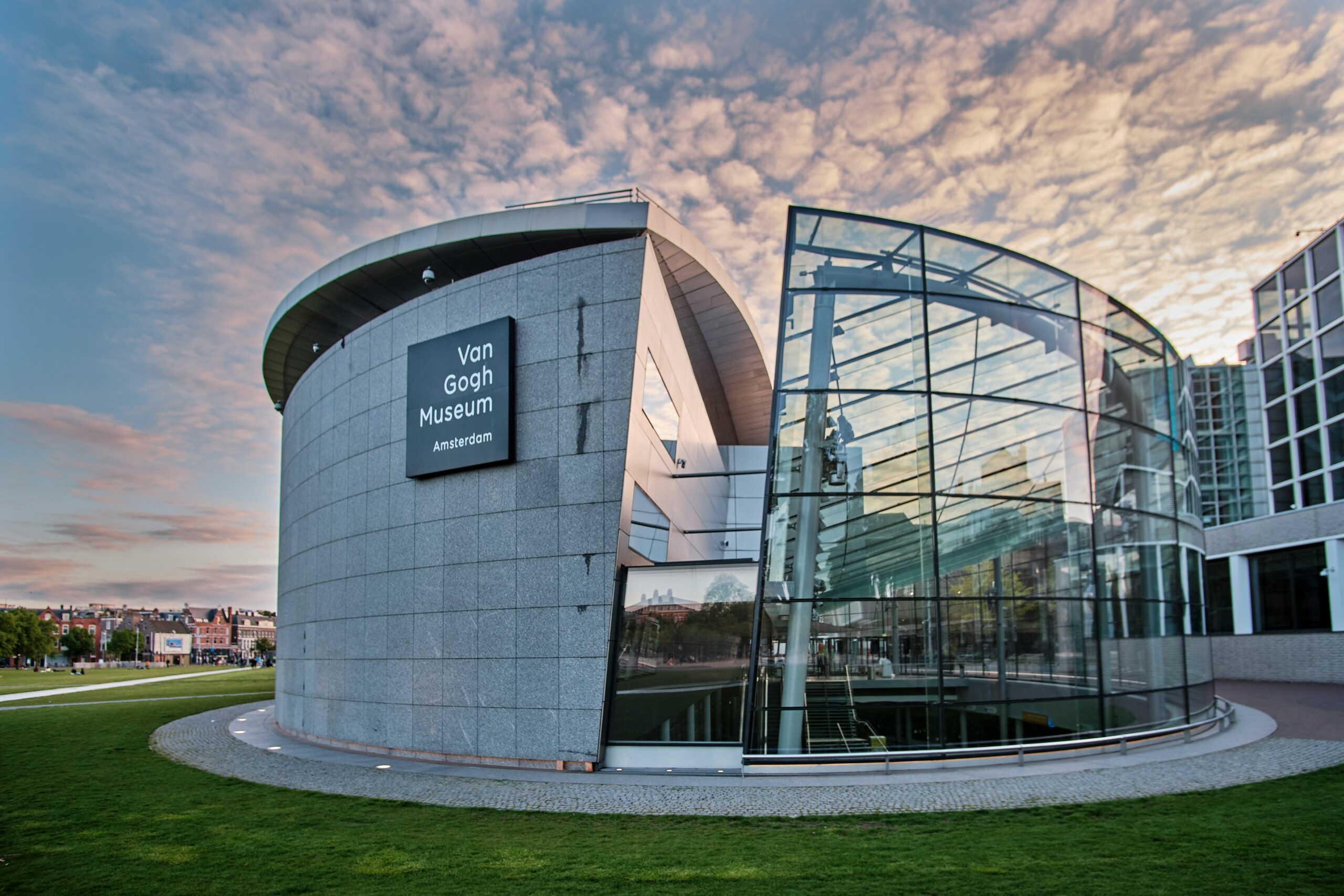
The museum stands on Museumplein in Amsterdam-Zuid, the wide, grassy square it shares with the Rijksmuseum and the Stedelijk Museum. The Stedelijk is its immediate neighbour. The Rijksmuseum closes off the far end of the square, and the Concertgebouw sits across the open lawn. Plenty of visitors try to do the Rijksmuseum and the Van Gogh in a single day. It's possible, but two collections of this weight back to back tend to blur together by late afternoon, and the second museum gets the tired version of its visitor.
The building visitors enter is the Rietveld building, the main structure and the home of the permanent collection. Everything on the core route happens here, with one exception covered at the end of this guide.
| Location | What's there | Best moment to visit |
| Rietveld, ground floor | Shop, café, introductory exhibition | Start (exhibition) and finish (shop) |
| Rietveld, first floor | Van Gogh's work grouped chronologically | Early, while attention is fresh |
| Rietveld, third floor | His contemporaries, shown in relation to his work | After the first floor |
| Kurokawa wing | Major temporary exhibitions | Last, reached by tunnel |
Rietveld Ground Floor: Arrivals and the Introductory Exhibition
The ground floor handles arrivals. The shop is right there, and it's tempting to browse it immediately. It makes more sense at the end, once it's clear which paintings left an impression and are worth a print or a postcard.
The café is the natural place to regroup, either before heading upstairs or between floors when the galleries start to feel full.
Give the introductory exhibition a few minutes even if the famous paintings are pulling you upstairs. It sets up the person before the pictures, and the chronological galleries above read better with that grounding. Visitors who skip straight to the paintings often find themselves backtracking to understand where he was and what he was trying to do at a given stage.
First Floor: The Chronological Galleries and the Arles Works
This is the heart of the visit. The first floor groups Van Gogh's paintings in the order he made them, so walking the rooms in sequence means watching his palette and brushwork change as he moved from place to place. Rooms make far more sense taken in order than sampled at random. A dark, heavy early canvas looks very different once the bright later work is waiting a few rooms ahead.
The permanent collection includes nine of his self-portraits, and they repay slow looking. He often painted himself because he couldn't afford models. Seen side by side, the self-portraits work almost as a record of his technique. The handling of the face and the colour of the jacket shift from one to the next, and comparing two of them closely teaches more than glancing at all nine.
The Arles works are the ones most people come for. The selection on display includes Sunflowers (1889) and the pairing of The Yellow House with Bedroom in Arles. These two belong together. The Yellow House shows the building he rented in Arles, and Bedroom in Arles shows his own room inside it, so looking at one straight after the other gives the sense of stepping from the street into his private space. Sunflowers draws the thickest crowd on the floor. A short wait for a clear view in front of it is worth it, because reproductions flatten the thick paint that gives the petals their texture.
Van Gogh Museum tours are a dependable way to find the self-portraits and the Arles paintings in a sensible order, with a guide who explains how each one fits the chronology while walking the first floor. That context turns a row of familiar images into a sequence with a clear thread running through it.
Third Floor: Van Gogh's Contemporaries
The third floor sets paintings by artists of his time alongside his own work, showing what he borrowed from and reacted against. It's easy to treat this level as optional after the intensity of the first floor, but skipping it is a mistake for anyone curious about why his paintings look the way they do.
What stands out here is how unusual his choices were. Next to his contemporaries, his colour seems louder and his strokes more visible, and that contrast is hard to grasp when looking at his work alone. A slower pace suits this floor. It tends to be calmer than the first, which makes it a good place to absorb what came before.
The Tunnel to the Kurokawa Wing
The Kurokawa wing hosts the museum's major temporary exhibitions, and its entrance is through a tunnel from the Rietveld building. There's no separate front door to look for on the square during a standard visit. The route is to finish the permanent collection, then head back down and follow the passage across.
Because the exhibitions change, the wing's content differs from one visit to the next. Checking what's on before arriving helps decide how much energy to save for it. A large show can easily need as much attention as a full floor of the Rietveld building, so leaving it until after the third floor works well only for those with stamina left.
Where are Sunflowers and the other Arles paintings?
They're among the selected Arles works shown on the first floor of the Rietveld building, within the chronological galleries. Following the rooms in order brings visitors to them naturally.
How do visitors get into the Kurokawa wing?
The entrance is through a tunnel from the Rietveld building. Start in the main building and follow the passage across to the temporary exhibitions.
Is the third floor worth the time on a short visit?
Yes, if there's any curiosity about context. Seeing Van Gogh's contemporaries next to his work shows how different his approach was, and the floor is usually quieter than the first.