
4Cs of Diamond Quality: Which is the Most Important C
When you're shopping for a diamond, you'll encounter the 4Cs everywhere. Cut, color, clarity, and carat weight form the foundation of diamond grading, and jewelers use these four characteristics to determine price. But here's what they might not tell you upfront: one of these Cs has far more influence on how beautiful your diamond looks than the others.
Why Cut Controls Everything Else
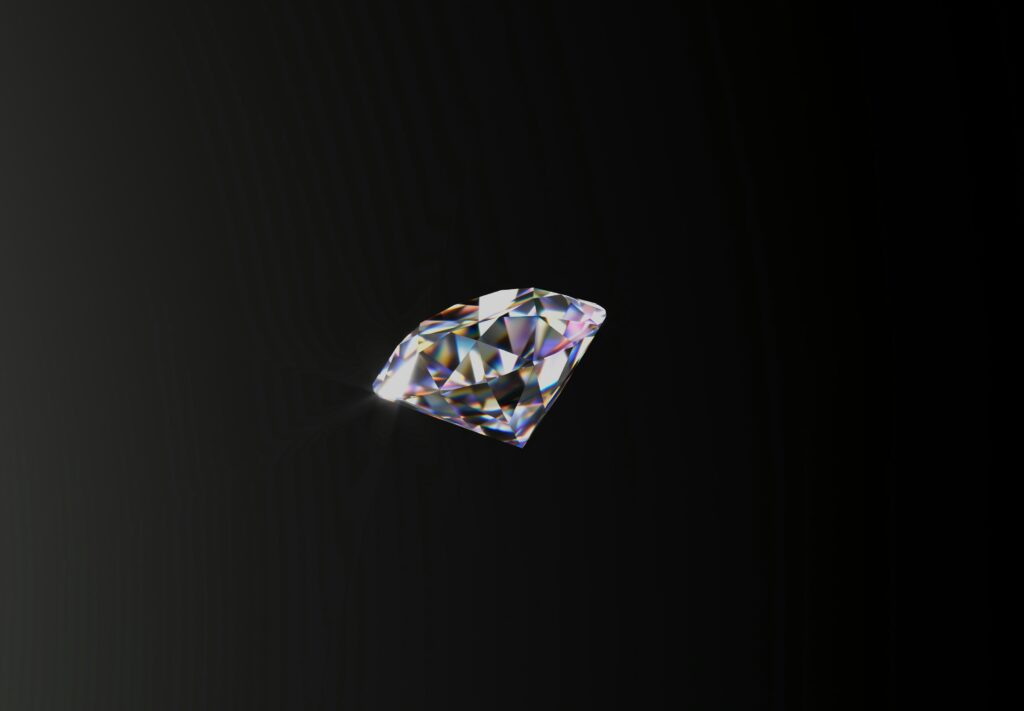
Cut determines how light moves through a diamond. A well-cut stone will sparkle intensely even if it has a slight yellow tint or visible inclusions. Poor cutting leaves diamonds looking dull, regardless of their other qualities. This happens because cut affects the angles and proportions that control light reflection and refraction.
Think about two diamonds sitting side by side. One has perfect color and clarity, but mediocre cut quality. The other has average color and clarity but excellent cut proportions. The second diamond will almost always look more impressive. Light performance trumps static characteristics every time.
The Price Game Nobody Talks About
Here's something interesting about diamond pricing. A one-carat diamond with D color (colorless) and VVS1 clarity (nearly flawless), but only Good cut quality might cost $8,000. Meanwhile, a similar one-carat stone with H color (near colorless) and SI1 clarity (slightly included) but Excellent cut could be priced at $6,000. That second diamond will likely appear more brilliant and lively to most observers.
Dealers know this. They'll often push diamonds with high color and clarity grades because these command higher prices. But unless you're buying for investment purposes or have specific requirements, paying premium prices for imperceptible improvements in color and clarity while accepting mediocre cut quality makes little sense.
How Different Diamond Shapes Hide or Reveal the 4Cs
Some diamond shapes are more forgiving than others when it comes to color and clarity grades. Round brilliants scatter light so effectively that they can mask slight yellow tints better than step-cut stones like an emerald cut diamond or asscher cut, where color becomes more noticeable through their large, open facets. The same principle applies to inclusions—cushion cuts and radiant cuts break up light in ways that make small flaws harder to spot.
This relationship between shape and the 4Cs affects pricing too. You might find that a round diamond needs a higher clarity grade to look clean compared to a princess cut of the same carat weight. Understanding these differences helps explain why two diamonds with identical grades on paper can look quite different in person.
Breaking Down Each C
Carat weight is straightforward. It measures how much the diamond weighs, with one carat equaling 200 milligrams. Larger diamonds are rarer, so prices increase exponentially rather than linearly with size. A two-carat diamond costs more than double the price of a one-carat stone with similar qualities.
Color grades run from D (colorless) to Z (light yellow or brown). Most people cannot distinguish between adjacent color grades without direct comparison. The difference between F and G color becomes nearly impossible to detect once the diamond is set in jewelry.
Clarity measures internal flaws (inclusions) and surface blemishes. Grades range from Flawless to Included. Many inclusions are microscopic and invisible without magnification. An SI1 diamond often looks identical to a VS1 diamond to the naked eye, yet costs considerably less.
Cut encompasses proportions, symmetry, and polish. Unlike the other Cs, cut quality isn't about what nature provided but what human craftsmanship achieved. Cut grades for round diamonds typically include Excellent, Very Good, Good, Fair, and Poor.
Real-World Diamond Selection
Let me walk you through practical selection strategies. If you have $10,000 to spend on a round diamond, you could get a 1.2-carat stone with D color and VVS2 clarity, but only Good cut. Alternatively, that same budget buys a 1.4-carat diamond with G color, VS2 clarity, and Excellent cut. The second option gives you a larger, more brilliant diamond that faces up beautifully.
For fancy shapes like oval or pear, the situation gets more complex since there's no standardized cut grading. You'll need to evaluate proportions yourself or work with someone who can assess light performance. Look for symmetrical shapes without dark bow-ties or excessive light leakage.
The Bottom Line on Priority
If forced to rank the 4Cs by visual impact, cut comes first by a wide margin. After securing excellent or ideal cut quality, carat weight usually matters next, since size is immediately noticeable. Color and clarity tie for last place in terms of visible difference, though personal preference plays a role here.
Some buyers insist on colorless diamonds while others happily accept warmer tones. Some want flawless clarity even under magnification, while others are comfortable with eye-clean stones that have inclusions visible only through a loupe. These preferences are valid, but they shouldn't override cut quality if you want maximum brilliance.
Remember that grading reports tell only part of the story. Two diamonds with identical grades can look remarkably different based on subtle variations in proportions, fluorescence, and inclusion placement. Seeing diamonds in person, when possible, beats relying solely on certificates.
About the Author

Anna is a twenty-something living in the south. She's passionate about family, crafting, and continuing her education beyond her college degree.