
12 Finance Tips to Furnish Your New Home
So you’ve found a new place and will be moving in soon, or are already moving in! This exciting time can be burdened by realizing just how much you need to furnish your new home. Yet, don’t panic, there are a handful of finance tips that may help you along the way.
Financially Friendly Furnishings for Your New Home
These frugal furnishing ideas can be mixed and matched to your needs as well as budget. Ultimately you’ll find ways to fill your house with necessities and more without draining your savings.
1. Buy Secondhand (Your #1 Money Saver)
Secondhand markets often have furniture that is as good a quality as what you'd get new but for a lower price—especially solid wood, vintage, or gently used items.
Where to shop
- Facebook Marketplace – large local selection; haggle-friendly
- Craigslist – great for larger furniture; often priced low
- Thrift stores – Goodwill, Habitat ReStore, Salvation Army
- Yard/estate sales – ideal for bargain bundles
- Local consignment shops – more curated, but still affordable
Tips
- Check daily—good items go fast.
- Always ask for measurements and inspect for damage.
- Bring basic tools and blankets for pickup.
- Negotiate politely; most sellers expect it.

2. Upcycle or Refinish Furniture
You can transform inexpensive or older pieces into something stylish and custom for very little money. Perhaps you even have a friend that likes this sort of thing and could help you out.
What you can do
- Repaint or refinish a dresser or table
- Replace knobs or handles with inexpensive hardware
- Reupholster seat cushions with clearance fabric
- Add decorative legs to raise or modernize a piece
Tips
- Stick to neutral colors so pieces remain versatile.
- Light sanding and good primer go a long way.
- YouTube tutorials can walk you through nearly any project.
3. Start With the Essentials Only to Furnish Your New Home
By focusing on the basics first, you avoid impulse purchases and overspending. Many people buy items they don’t actually need once they start living in their new space.
What counts as “essentials”
- Bed + bedding
- Sofa or comfortable seating
- Dining table/multipurpose table and seating
- Lighting/lamps
- Basic kitchenware and storage
Tips
- Live in the space for a few weeks before adding décor or extras.
- Prioritize function over style at first; you can layer aesthetics later.
4. Shop Clearance, Outlet, and Scratch-and-Dent Sections
You'll get brand-new pieces hugely discounted simply because of things like small cosmetic flaws or discontinued colors. Some stores need to move items quickly to make room for new so if you’re not looking with a fast fashion mindset you’ll have more options when furnishing your new home.
Where to look
- Furniture store outlets
- Ashley Furniture clearance
- IKEA As-Is section
- Lowe’s/Home Depot for cabinets, shelving, etc.
- Macy’s backstage furniture
Tips
- Inspect thoroughly—ensure issues are cosmetic, not structural.
- Ask if stores offer extra discounts on floor models or imperfect items

5. Use Multi-Purpose Furniture
One piece of furniture replaces two or three, saving space and dollars. You can do this from the start until you are able to do more in your space. Or, if you really like a particular multi-functional item, keep it long term.
Examples
- Storage ottoman = coffee table + storage
- Sleeper sofa = couch + guest bed
- Drop-leaf or expandable table = dining table + small-space solution
- Bookshelf as room divider
Tips
- Stick to neutral, flexible pieces.
- Ensure mechanisms (like sleepers) function smoothly before buying secondhand.
6. Use “Buy Nothing” and Free Groups
You can get completely free, usable furniture simply because people want it gone. Just be prepared to do the pick up as needed.
Where to check
- Buy Nothing Project (Facebook groups by neighborhood)
- Freecycle.org
- Local community groups or Nextdoor
Tips
- Respond quickly—free items go fast.
- Be polite and reliable; many givers prioritize friendly takers.
- Remember to sanitize items and check for pests (especially upholstered furniture).
7. Repurpose What You Already Own to Furnish Your New Home
Reimagining what you already have keeps your budget intact and also reduces clutter. When the mundane threatens, let yourself get creative.
Ideas
- Use a dresser as a TV stand
- Stack wooden crates into bookshelves
- Turn a console table into a small desk
- Use baskets for stylish storage
- Folded blankets as makeshift cushions until you find seating
Tips
- Think about function, not original purpose.
- Pinterest is great for repurposing inspiration.
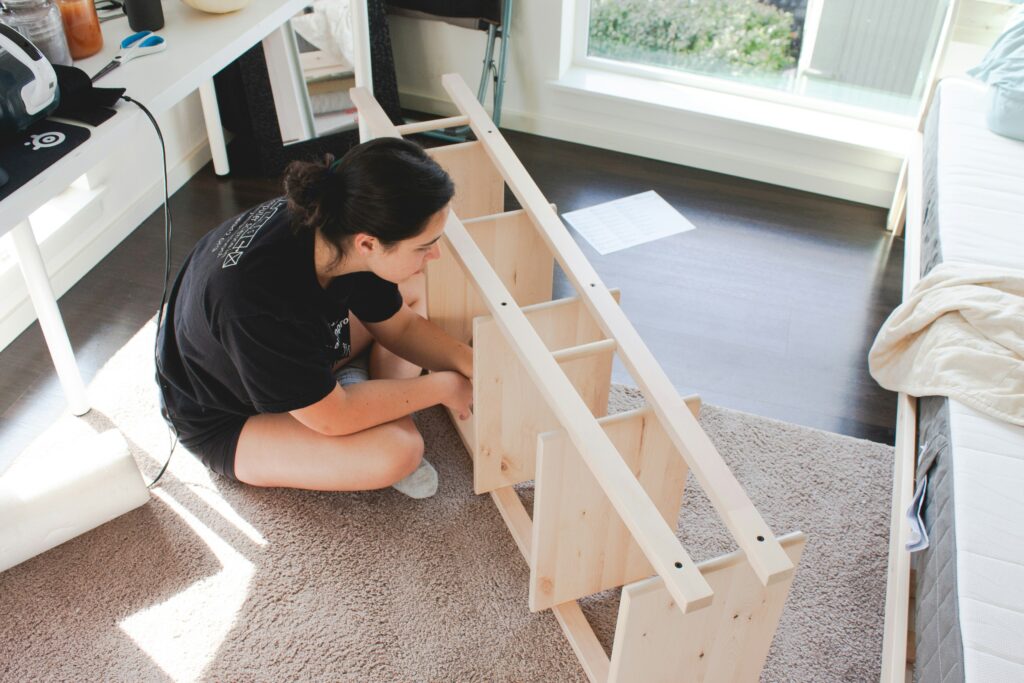
8. Choose Flat-Pack or DIY Assembly Furniture
Items you assemble yourself are cheaper to produce and ship, so you save money. Just stay patient or have a friend join the fun if a piece is more intricate.
Good places for inexpensive flat-pack
- IKEA
- Walmart
- Target
- Amazon basics
- Wayfair budget lines
Tips
- Read reviews—some low-cost items vary in durability.
- Stick to simple pieces (shelves, tables) and also avoid complicated cheap mechanisms.
9. Compare Prices and Time Your Purchases
Furniture has predictable pricing cycles, and you can save hundreds by waiting for the right sale. Outside of your non-essentials, this can be the way to go.
Best times to buy
- Memorial Day
- Labor Day
- Black Friday
- January clearance
- End-of-season closeouts
Tips
- Add desired items to wishlists and track price drops.
- Sign up for store newsletters for coupons.
10. Decorate Simply and Affordably when Furnishing Your New Home
Décor can get expensive fast, but you can create a warm, stylish home with minimal cost. As long as brand name items aren't making your list you'll have a lot of options.
Affordable décor options
- Thrifted frames and art
- Houseplants (even propagation from friends!)
- Throw pillows from discount stores
- DIY wall art, shelves, or centerpieces
- Neutral curtains that work in any room
Tips
- Stick with classic basics.
- Layer texture instead of buying many items.
11. Borrow Tools for Setup and DIY Projects
Tools can be costly, and depending on your trade or hobbies, they are rarely used again. If you buy them outright you would also have to consider tool storage too.
Where to borrow
- Friends, family
- Tool lending libraries
- Some hardware stores rent out tools cheaply
Tips
- Make a list of all projects needing tools to minimize repeat borrowing.
- Return tools promptly (helps for future borrowing!).

12. Mix High-End and Budget Pieces
Strategic investing saves money long-term because certain pieces need durability, while others don’t. Choose a few main pieces at a higher quality that you're fine spending more money on when furnishing your new home.
Worth spending a bit more on
- Mattress
- Sofa
- Bed frame
- Everyday-use dining chairs
Safe to buy cheap
- Nightstands
- Side tables
- Bookshelves
- Décor
- Rugs (especially in high-traffic areas)
Tip
Let the main investment piece anchor the room, and fill in with thrifted décor.
Final Thoughts on Furnishing Your New Home, Finance Friendly Edition
Furnishing a home doesn’t have to drain your savings. With planning, creativity, and smart sourcing, you can build a comfortable, stylish space on a budget. Hopefully these strategies will get you off to a great start and have your new place feeling like home in no time.
About the Author

Anna is a twenty-something living in the south. She's passionate about family, crafting, and continuing her education beyond her college degree.